The SDC2 (Smart Disassembly Cell for Circularity) project is developing solutions to accelerate the shift towards a circular economy.
Six Carnot ARTS laboratories, including four Arts et Métiers involved in the SDC2 project (I2M, LISPEN, L2EP, LCFC, LAMIH, ESTIA Recherche), in partnership with the Nouvelle Aquitaine Region and the Carnot CETIM and Energies du Futur (G2ELAB and G-Scop in Grenoble). This broad mobilization of stakeholders allows SDC2 to work in synergy with the European MAXIMA project on high-performance electric motors designed to be circular (led by L2EP) and with ANR VIVAE (led by G-Scop) on the development of a circular economy approach for power converters.
Nicolas Perry, a lecturer and researcher at I2M and member of the Carnot ARTS management committee, is supporting the project.
What are the major challenges of this project?
The ecological challenges are clear to everyone. Regulations now require manufacturers to display their repairability ratings and will soon impose repair and product life extension as a priority objective at the end of initial use.
From a geostrategic and macroeconomic perspective, it has become clear that greater sovereignty over materials and components is needed to break free from supply dependencies. If functional recovery is not relevant, over-sorting components will make it possible to identify efficient material recycling channels, rather than resorting to global shredding, which dilutes the fractions of interest and reduces material recovery efficiency.
In economic terms, it is imperative to improve product processing performance. Sorting and disassembly operations are still very manual, which reduces their profitability and slows down their widespread adoption. The idea is to only need to mobilize operators for key or critical steps.
There will therefore also be a significant human challenge in ensuring the safety of operators in their new working environment, while enriching it with the data and technological assistance needed to manage and carry out the entire disassembly process.
The project selected three case studies. How was the selection made?
By focusing on electric motors, large household appliances, and power converters, we have prioritized items that are increasing in quantity as end-of-life products.
Systems related to the transition to electricity (electric motors, power converters) pose challenges in terms of critical materials and resources (copper, rare earths, etc.). Studies on batteries are currently focusing on operator safety constraints to limit the risk of electric shock and fire.
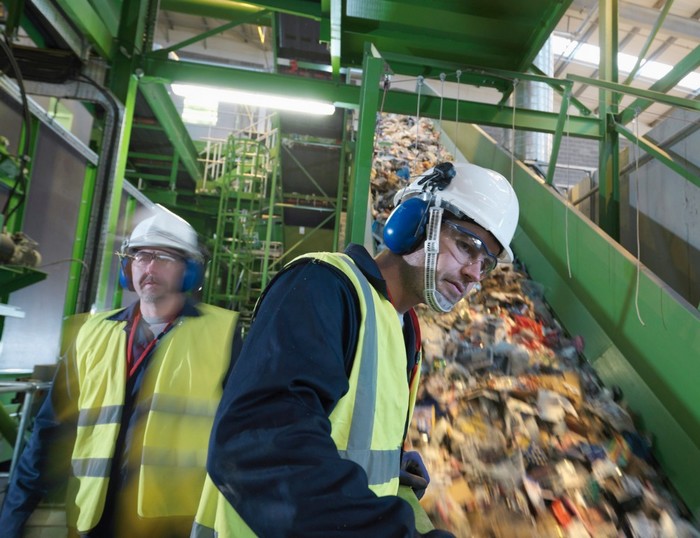
WEEE (waste electrical and electronic equipment) is a massive resource and therefore a major challenge for the recycling industry. We will pay particular attention to large household appliances, as they pose handling difficulties for operators and open up avenues for repair as well as disassembly.
What technological barriers need to be overcome to accelerate the adoption of circular economy models?
The goal is to pivot technologies from Industry 4.0 to Circularity 4.0.
The first obstacle is related to product variability. An end-of-life product is a sum of uncertainties, particularly those related to its past conditions of use.
Work also needs to be done on the ability to identify components and parts of interest for recovery, not only in terms of their criticality but also their constraints and recycling prospects. Depending on the market, the requalification of second-life components will require testing or certification. This will need to be anticipated during the disassembly process.
Carnot ARTS, a label of excellence
Awarded by the Ministry of Higher Education and Research, the Carnot label recognizes the excellence of public research laboratories engaged in technology transfer and innovation for businesses. In France, the Carnot Network, comprising 39 institutes, accounts for 55% of public-private partnership research.
The Carnot ARTS institute, historically supported by Arts et Métiers, has been certified since 2006. It brings together 23 laboratories in France, including 15 Arts et Métiers laboratories. It is managed by AMVALOR.
Projects benefiting from Carnot funding enable our laboratories to explore disruptive technologies aimed at anticipating industrial needs. In 2023, 17 projects benefited from this scientific resource.
Among the most structuring and ambitious projects that are currently underway or have just been completed are: ScCRYO2 on CO2 machining assistance, RehaByExo in the field of healthcare, SMARTFOIL on the ships of the future, SCD 2 on the challenges of the circular economy, and OptUseH2 on the hydrogen sector.