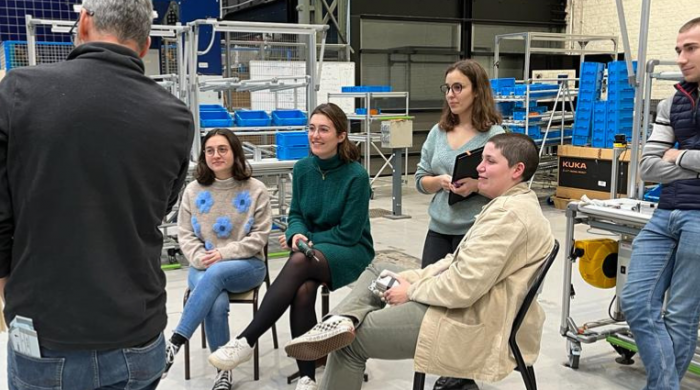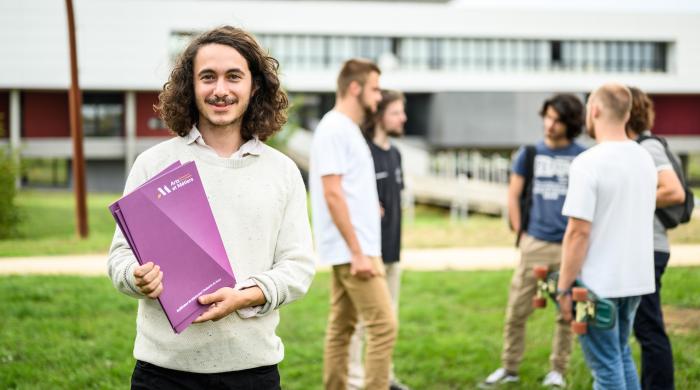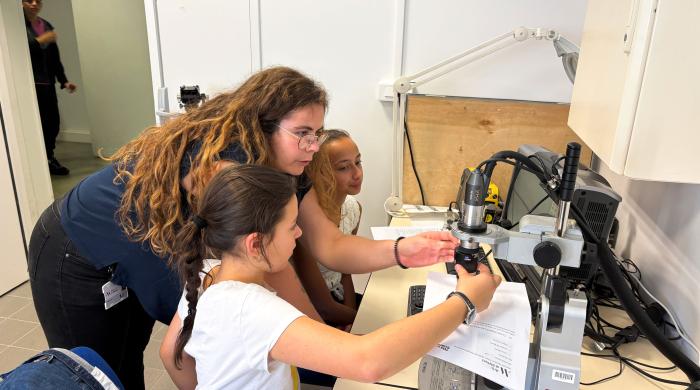
As part of the Lille campus's growth towards a Campus 4.0 and the integration of Evolutive Learning Factories educational projects, two groups of students are carrying out theirsecond-year PGE project on decision support and workshop management optimization issues using digital twins.
Modeling and optimizing the future Industry 4.0 workshop on the Lille campus using digital twins
 To explore these themes, digital twins are indeed increasingly being usedThe first group of students is working on modeling and optimizing the future 4.0 workshop.
After assessing the current situation, the students began working on digital twins: "The advantage of digital twins is that you can see production in real time and modify parameters," they explain. In fact, each product made in the workshop can follow a circuit from design to casting, machining, and assembly. Other processes can be used to manufacture the same product: the digital twin should help in choosing the best process to use based on certain criteria.
Claire, Pauline, Jef, and Amaury chose this project because of its unique application to education: "Usually, digital twins focus on a single machine to control it remotely, but we found it interesting to be able to model an entire production line by tracing the path of a part through the workshops to observe the different parameters and, thanks to a decision-making tool, choose the best manufacturing mode, better manage the production schedule, locate parts in real time, etc."They will therefore also be able to offer practical work for future student cohorts, for example to imagine the addition of new modules to the production line.
Through this project, students develop their skills in Python, industrial management, and project management, all on a topic that is relevant to them, with a view to integrating it intoEvolutive Learning Factory . To this end, they are supported by their teachers Maurice LEPOIVRE and Nathalie KLEMENT.
Decision support through digital twins
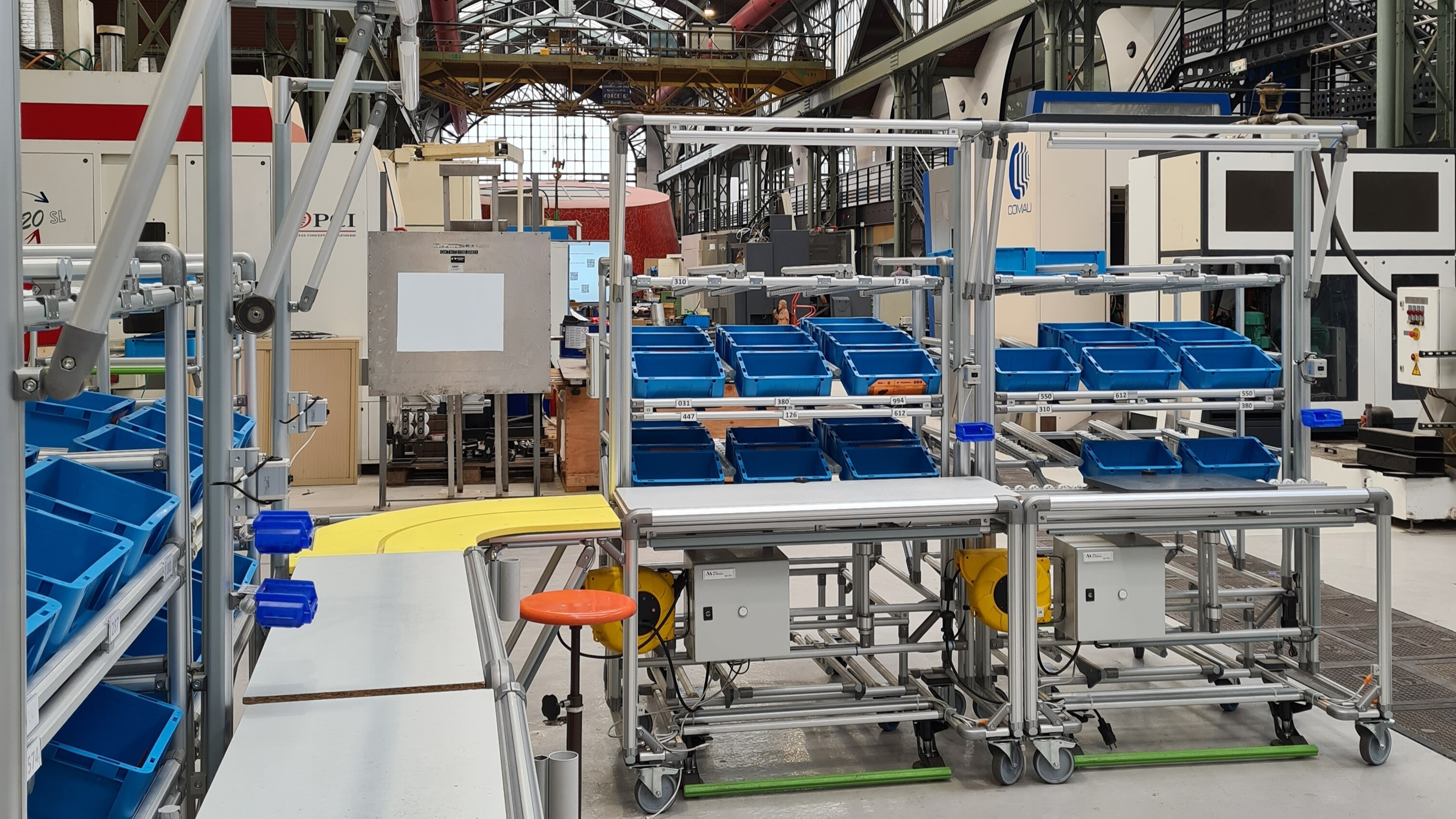
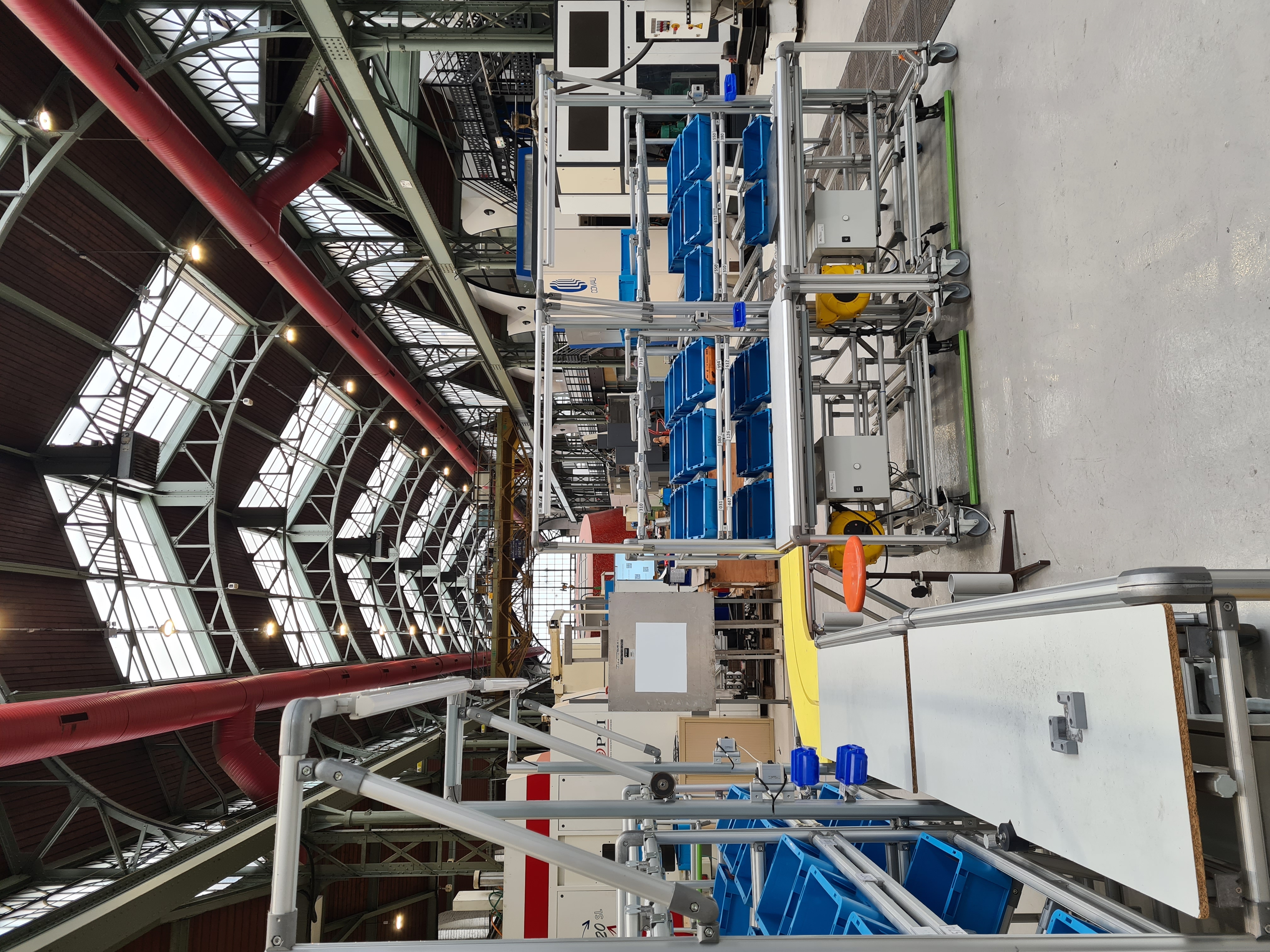
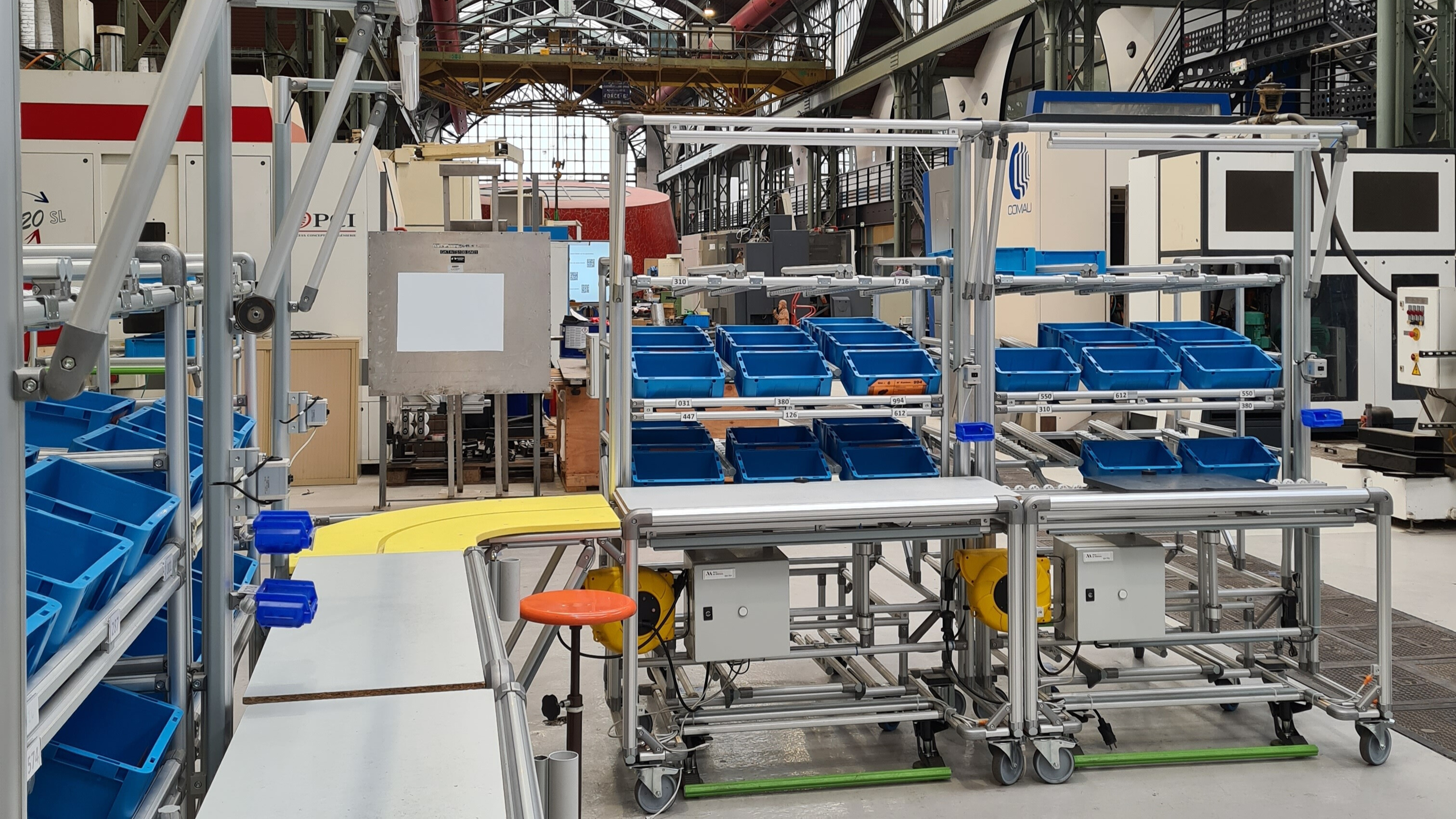
For the second project, which focuses on the assembly process, the students began by defining sensors on the educational line in the campus workshops. This enabled them to model the U-shaped chain on a computer and prevent potential problems. The objective, and also the advantage, of these simulations with the digital twin isto study the various possible scenarios and choose the best one to optimize production: avoiding bottlenecks, finding the production schedule that will result in the shortest possible cycle time, balancing the work between operators to optimize the production stages, creating an ergonomic interface on a large screen in the line under real conditions (as in a real production plant)... these are all issues that the students have to work on.
To be successful, this project, which was launched this year, will certainly be continued over several years and taken up by future classes.
On the educational side, the students in this group divided up the tasks according to their skills: Quentin and Joanne are working on the Python interface (new module and popularization), Clara is currently managing the data from the sensors and will then join her classmates on the interface work, and finally Evan is developing algorithms to solve balancing and scheduling problems.
"Thanks to this project, we are building on the skills we acquired and discovered in PJT1A; we are also discovering a new way of processing information compared to the Prep program," they say.
They chose this project because some factories have interfaces on their production lines that display production indicators. Here, they are going one step further by proposing an interface that will also optimize production. This is a way for them to look ahead and be pioneers in the field of digital twins with algorithms by participating in the development of the campus's educational program.
They explain: "Our goal is not to market this system, but to understand how it works. We are essentially drawing on experiences we had during internships in factories and with the support of our teachers."This project is the brainchild of Nathalie KLEMENT, who supervises these two groups. The students also consult Anthony QUENEHEN for information about the line.
Thissecond-year project also allows them to fulfill another objective: to create practical work topics for next year'sthird-year students studying Industrial Management. This will be an opportunity for them to carry out full-scale tests.
Their teacher's opinion
"PJT2A projects are very rewarding, both for students and especially for teachers. During these projects, students are a source of ideas. Our discussions are constructive and allow us to identify ideas that we might not have thought of on our own. I am convinced that ELFs (Evolutive Learning Factories) will bring students and staff together around a common project. I would like to give special thanks to the students who contributed to the projects I am leading. I thank them for their involvement, their dedication, and their kindness."