
Charlotte Chan, an engineering student Arts et Métiers, is completing her third year of study at KTH in Sweden.
Passionate about composite materials
Charlotte Chan is a third-year engineering student. After completing two years of preparatory classes at the Lycée Sainte Geneviève in Versailles, she enrolled at the Arts et Métiers campus Arts et Métiers Lille. During her first year on campus, she discovered composite materials. The engineering student quickly became interested in them: "I quickly realized that there are many possible applications for composite materials, with a wide range of possibilities for engineers who get involved in this field, as these materials are not yet widely used." In addition, the engineering student points out that working with composite materials also means helping the environment.
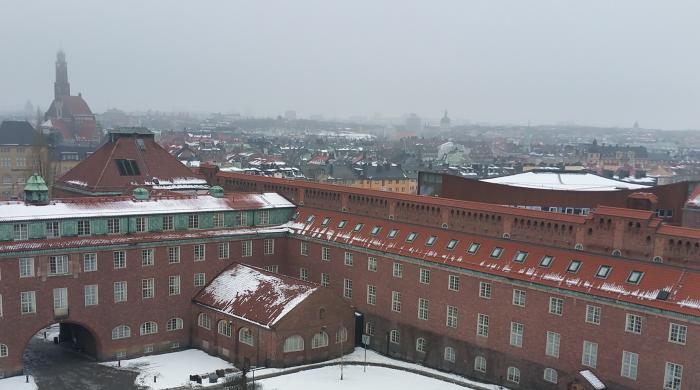
She chose to attend KTH (Royal Institute of Technology) for her third year of engineering studies. This Swedish institution offers a specialization in composite materials. Beyond the specialization, Charlotte wanted to spend a year studying abroad: "I plan to work internationally, so I felt it was essential to immerse myself completely in a foreign country for a year."
A year at KTH
Charlotte emphasizes that "my year at KTH complements the two years I spent at Arts et Métiers Indeed, she highlights the practical nature of the courses taught at the Arts et Métiers campus Arts et Métiers Lille and adds that KTH offers a more theoretical curriculum. In fact, the young woman attends between 11 and 15 hours of lectures per week in Sweden. "You have to be independent at KTH and work outside of class hours." Although the number of hours may seem low, KTH students must spend their free time developing a project throughout the year. It is this project that gives students the practical aspect of their studies.
A school project on composite materials
Charlotte has been working for five months on a project to test the properties of composite materials. The ultimate goal of the project is to build a drone capable of taking off from water. It will also be equipped with sonar to measure the depth of the water. "Composite materials are essential here because they are lightweight, which is what allows the drone to take off from the water. With heavier materials, this would be impossible," explains Charlotte.
In order to complete her project, Charlotte has decided to spend an extra semester at KTH. Once this semester is over, she will move on to a six-month internship.