Words fromArts et Métiers Ep. 26 - Philippe Jacquet
Words fromArts et Métiers is back with a new episode: Metallurgical Innovation at the Arts et Métiers Campus and the LabCom CLAS: An Interview with Philippe Jacquet.
LF4VET (Learning Factories for the Pedagogical and Digital Transformation of VET Systems) is an Erasmus+ collaborative project aimed at supporting vocational education and training (VET) centers in their digital, ecological, and pedagogical transformation through the promotion and development of Learning Factories.
The goal of the project is to identify ways to integrate Industry 5.0 technologies (AI, robotics, digitalization) into these centers through practical educational scenarios that place people at the center of the learning process.
It will enable the design and analysis of interdisciplinary learning situations based on Evolutive Learning Factories ELF), by developing concrete teaching scenarios to help teachers adopt them. It also provides an opportunity to share the ELF experience with European partners who also use school-factories, in order to identify unique features. Finally, the project will complement the work undertaken within the framework of national projects such as École de la batterie, ConfluencES, and RéClasSIF.
The project is led by the Basque center IESFP Miguel Altuna and will run for 30 months; it involves three other academic partners: Arts et Métiers, FH JOANNEUM, and Teaching Factory.
![]() | ![]() | ![]() | ![]() |
Schneider Electric Mâcon signed a new partnership agreement with the Arts et Métiers campus Arts et Métiers Cluny on Friday, March 20, 2026, at its Mâcon site, near Cluny.
On January 16, the Arts et Métiers campus Arts et Métiers Paris welcomed members of the ConfluencES project for an in-depth tour ofEvolutive Learning Factory ELF).
ConfluencES supports higher education and research institutions in transforming their educational programs, learning environments, and research activities to align them with the socioeconomic needs of industries and regions.
Launched in 2024 and led by the CNAM as part of the France 2030 plan “Excellence in All Its Forms,” the ConfluencES project aims to align educational offerings with the needs of a constantly evolving economy. With a budget of €13.3 million granted by the ANR over eight years, the project seeks to improve career readiness by evolving the educational offerings of its partner institutions—from the first year of higher education through the doctoral level—to address the digital, ecological, and demographic transition challenges facing regions.
With close ties to the French industrial sector, ConfluencES meets the needs of all regions for both initial and continuing education through blended learning programs (online courses, project-based learning, etc.), and offers flexibility by combining new skills with existing credentials.
ConfluencES aims to continuously rethink training—in terms of its content, formats, and learning environments—to better respond to rapid changes in the workplace, through four main areas:
As coordinators of ConfluencES’s Axis 2, Arts et Métiers to transform learning spaces through the development of Evolutive Learning Factories ELF)—connected school-factories—across all campuses.
To support France’s reindustrialization, these small-scale factories encompass the various stages of a production chain—from design to material recycling—while incorporating new technologies
ConfluencES thus contributes to the modernization of buildings and their facilities, the design of these new spaces, and the training of engineers by emphasizing two key elements: an interdisciplinary approach to teaching and research within these structures, and their accessibility to a broad audience (from schools to businesses) in order to address the challenges of raising awareness about careers in industry and their socio-economic needs.
To strengthen the research dimension provided by ConfluencES and in collaboration with ENSAM and ESAPLV, Loris Préaud is dedicating his thesis to studying the impact of ELFs on pedagogy and the link between artisanal know-how and industrial production.
Conservatoire National des Arts et Métiers
National School ofArts et Métiers ENSAM), CESI, National School of Architecture Paris-La-Villette (ENAPLV), Association Ouvrière Compagnon Devoir Tour Franc (AOCDTF), French Institute of Fashion, Duperré Technical High School, Cap Métiers Nouvelle-Aquitaine

This work received government funding administered by the National Research Agency under the Investments for the Future program.
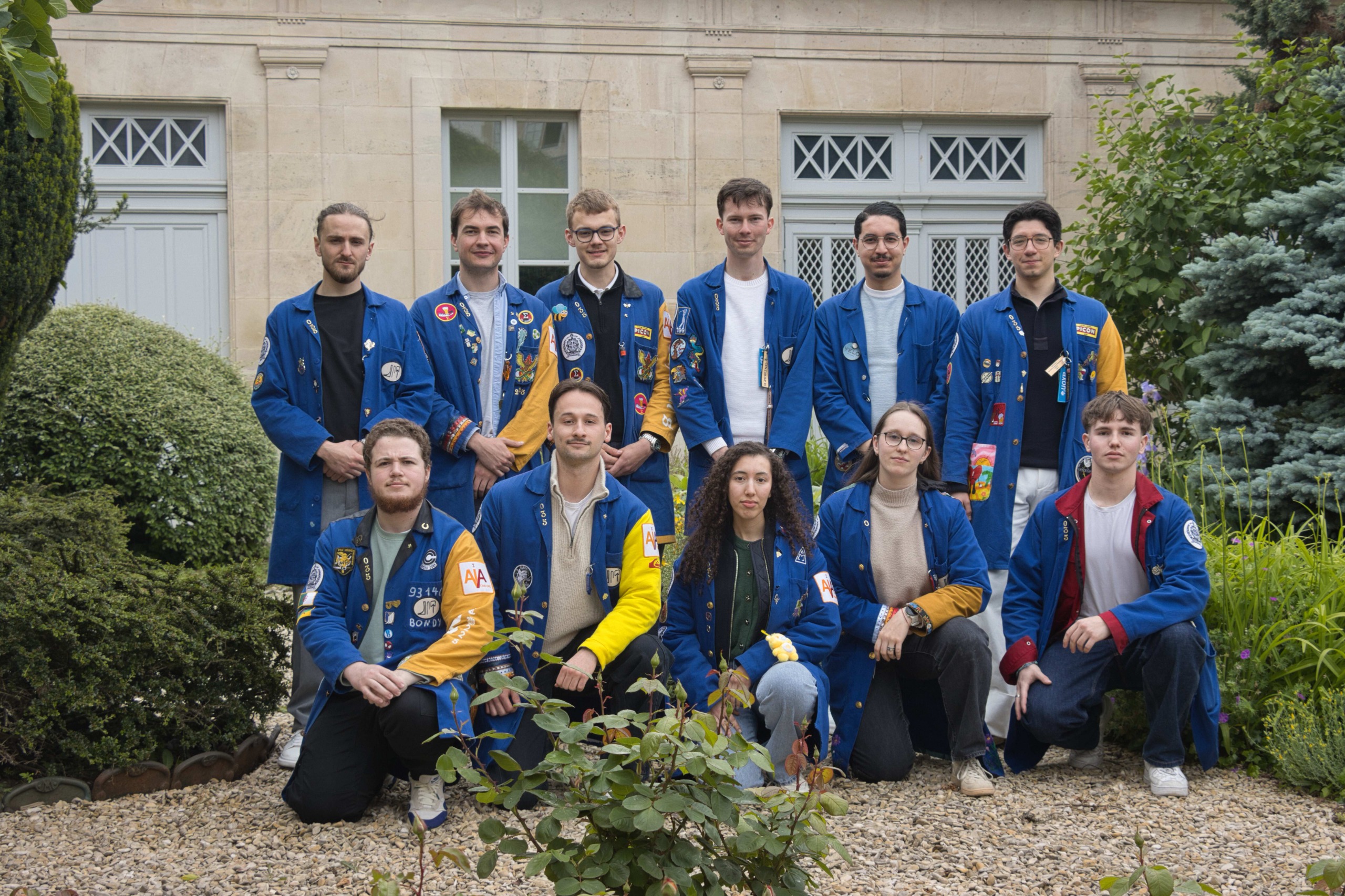
“When I grow up, I want to be an engineer…”! Eighteen students from the Lille campus are participating in the “Science Partners for the Classroom” project to introduce preschool and elementary school students to the fields of science and engineering.
A partnership at the heart of Europe for over 30 years, the Franco-German Institute for the Industry of the Future (IFA) embodies the scientific and academic collaboration of excellence between Arts et Métiers the Karlsruhe Institute of Technology (KIT). The Institute addresses the major challenges of the industry of the future through engineering education, doctoral training, Franco-German research, and technology transfer.
The partnership between Arts et Métiers KIT began in 1996 at the Arts et Métiers campus Arts et Métiers Metz with the launch of the Franco-German dual engineering degree program. This dual degree laid a solid foundation for the collaboration, which expanded into research in 2016 with the creation of the Franco-German Institute for the Industry of the Future (IFA).
Through this strategic partnership, the IFA helps to enhance the visibility and appeal of French and German expertise in engineering and in key scientific fields related to industrial transformation in Europe.
The research conducted at the IFA focuses on three scientific areas:
These three research areas are complemented by two cross-cutting themes that address the full range of issues related to the industry of the future, in close alignment with technological and societal developments:

Around these themes, nine French and German research laboratories and institutes are pooling their skills, equipment, and expertise.
France | Germany |
In addition to training Franco-German engineers, the Franco-German Institute provides an ideal setting for training future industry experts through its affiliated Franco-German doctoral program.
Thanks to the support of the Franco-German University, the doctoral program offers:
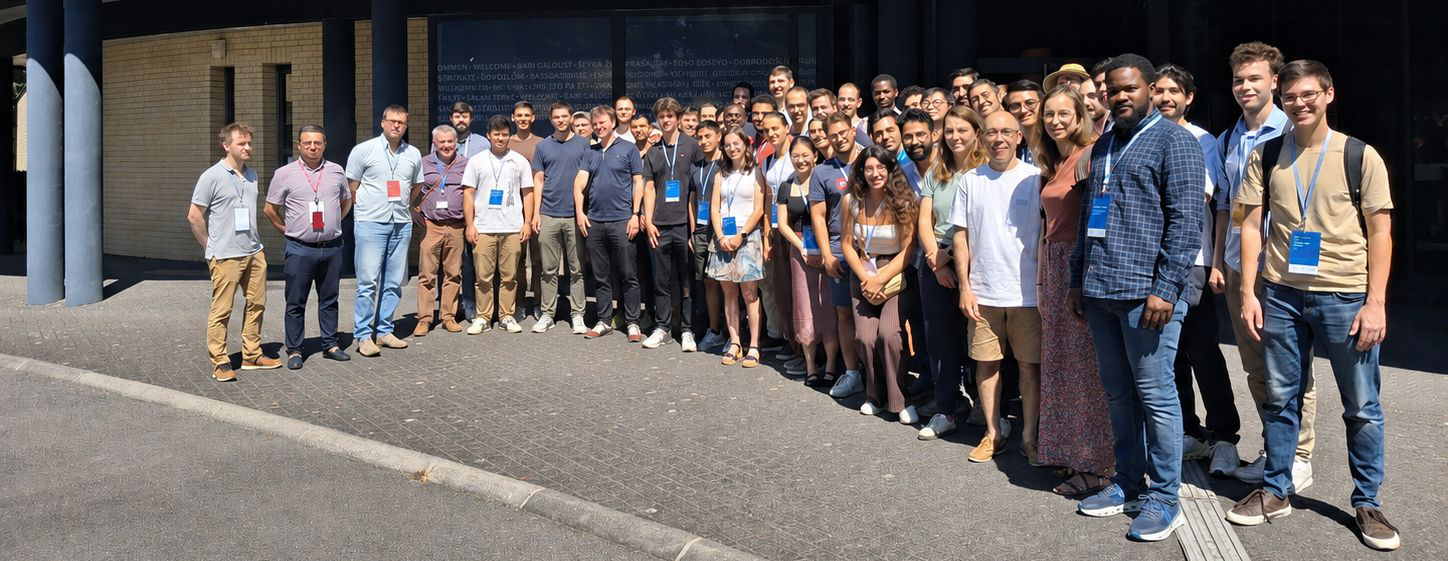
To bring together young researchers from KIT andArts et Métiers, a thematic summer school is held annually, alternating between France and Germany
Launched in 2025, the GENIUS Chair aims to support the transition of industrial systems toward more resilient, sustainable, and competitive models.
With more than 12 binational research projects, 20 researchers involved, 900 graduate students, and 8 partner laboratories, GENIUS aims to serve as a true Franco-German catalyst for education, research, and industrial transfer.
This momentum is made possible by the Franco-German Institute, of which it is a part.
The Franco-German Institute receives support from the Franco-German University (UFA) for its entire academic program (dual engineering degree and doctoral school) as well as for the GENIUS Chair. Franco-German University
In general, the IFA receives institutional and regional support:
Baptiste Sandoz and Agathe Navailles are among the 50 scientists selected at random who participated in the Scientific Convention on Knowledge.
CircLean aims to modernize engineering education by seamlessly integrating three key areas: lean manufacturing, the circular economy, and digital transformation.
CircLean addresses a pressing need: to bridge the gap between the skills taught in higher education institutions and those expected by industry, particularly in the context of smart manufacturing. Three universities are collaborating: Arts et Métiers, theUniversity of Coimbra, and the Royal Institute of Technology (KTH) and it is supported by XL Training, a subsidiary of XL Group. The project develops innovative teaching modules, a methodology based on design-oriented research, and a portfolio of ready-to-use educational resources. Activities include designing instructional sequences, creating immersive “learning factory” environments, and conducting experiments with students. CircLean aims to enhance the employability of future engineers, improve the relevance of training programs, and widely disseminate its results to other institutions and stakeholders in the field of education.
In the long term, the project aims to transform teaching practices in the areas of lean, circular, and digital education, and to make these approaches easily replicable in other academic and professional contexts.
CircLean aims to modernize engineering education by incorporating three approaches that are essential to the industry of the future: the lean, thecircular economy and the digital. The primary goal is to bridge the gap between academic training and the real-world needs of businesses, in order to improve students’ employability and prepare them for the challenges of smart, sustainable, and efficient manufacturing.
To achieve this overall goal, CircLean is guided by seven specific objectives:
The implementation is based on three main areas: