lifelong skills development

Image principale
Entreprise visuel 2
Chapô

Concrete responses to changing skills requirements.

Corps de texte principal

In the face of the rapid changes in industry and occupations, training is more necessary than ever. Arts et Métiers offers its expertise to employees and other workers to contribute to their employability throughout their working lives.

All employees and workers are now considered to be the main players in their own professional development and skills adaptation. This ambition, which arrived with the 2014 vocational training reform, is a perfect match for the Arts et Métiers approach: offering a wide range of training arrangements and activities to meet all the needs of businesses and their employees. These courses are also open to job seekers and students.

Using the progress of the research and expertise of each campus as a basis, Arts et Métiers many programs are constantly developing and adapting.

It is also possible follow a Specialised Engineering course over three years. Designed for job seekers and students, the Mastère Spécialisé© provides cutting-edge expertise in a specific field or role.

Arts et Métiers also offers short and bespoke training courses for companies – which can then promote their employees' skills as well as those of workers on individual training leave and job seekers.

Recruiting Arts et Métiers students

Image principale
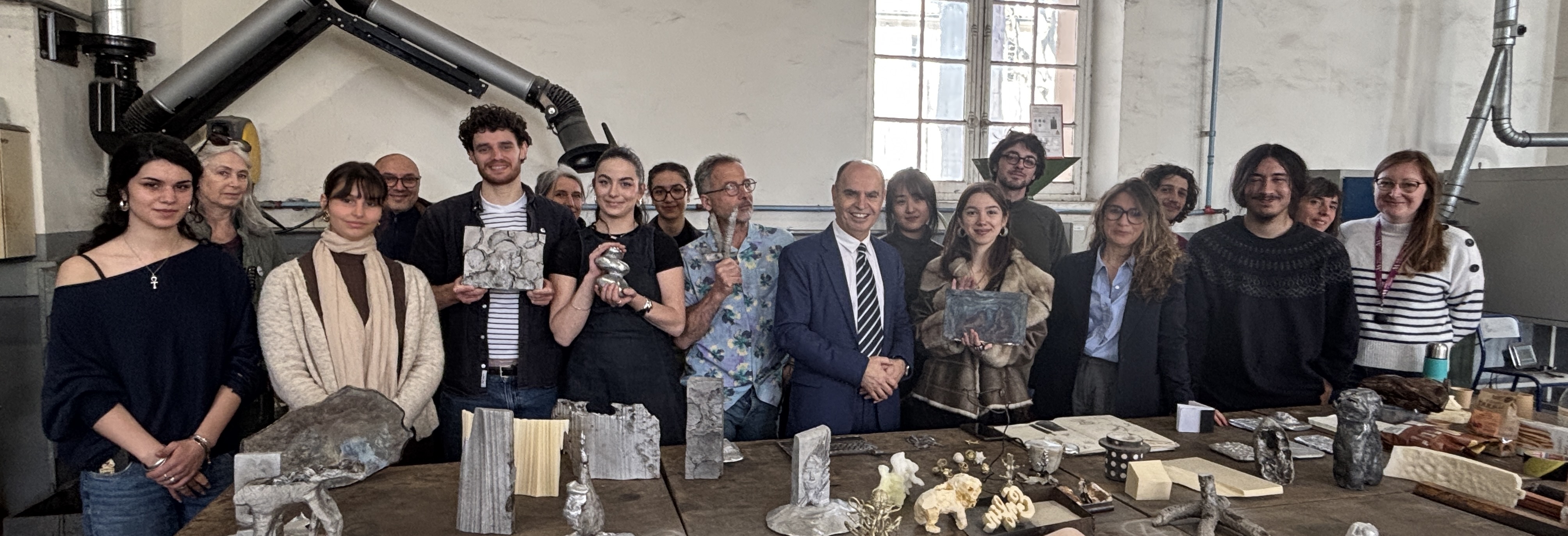
Atelier Etudiants Chalons
Chapô

Internships, apprenticeships and jobs: businesses have many opportunities to find out about – and assess – the skills of Arts et Métiers students and graduates.

Corps de texte principal

Internships

As part of their curriculum, engineering students must complete several periods working in companies. They must do at least two internships; one internship of four weeks during the first year, an optional industrial internship during the second year and one end-of-course internship. The bachelor's degree courses also include periods of work experience.

Offer an internship

More than 2,500 internships are undertaken every year.

The first-year shop floor internship is an opportunity to find out about the industrial world. For a period of four weeks, it aims to enable the student to perform tasks as an operator in the fields of production or industrial services.

During the second year, the optional industrial internship enables students to put their skills to use during an assignment. Taking place in France or abroad, it is scheduled over a period of 13 weeks between mid-June and late September. The purpose of the internship is to put into practice what is learned during the course units: creating a preliminary project, developing a detailed design, controlling material processing, designing an industrial system, controlling an industrial system and assessing human/structure/society interactions.

The end-of-course internship, taking place over six months, demonstrates the knowledge and skills acquired throughout the course of study. It leads to a report, an assessment by the internship supervisor at the company and a public oral presentation.

Bachelor's degree training also includes internships, which play a direct role in the enhancement of students' skills: a four-week shop floor internship during the first year, a three-month internship during the second year and accentuated on-the-job immersion in the final year.

To offer an internship, go to our dedicated platform

Apprenticeship contracts

The Specialist Engineering training provides three years of apprenticeship with some time spent at the school and some in a company. The General Engineering includes an apprenticeship curriculum offering 24 places per year.

Recruit an Arts et Métiers engineer: the forum

The forum is the annual event for companies wanting to meet students and young graduates.

About 150 companies, of all sizes and from all industries, participate in the annual forum  organised by the Arts et Métiers students. Being put directly in touch with the students makes a major contribution to their recruitment programmes.

Every year, the Arts et Métiers Forum attracts around150 companies and more than 5,000 students and future engineers. This gives recruiters the opportunity to interact with the talented young people from all the school's campuses, who travel for this occasion, and to find out about the added value they can offer employers.

Planned for this event: business conferences and round tables on industrial themes, as well as themed topics (areas for advice, small businesses and foreign companies).

Recruit an Arts et Métiers engineer: posting job offers

Recruiters can also post their job offers on the websites of the two alumni associations:

European projects

Image principale
Programme Erasmus+ (banner)
Chapô

At Arts et Métiers, the shared objectives of research and industry partners drive many of our collaborations. They fuel the development of projects and skills in order to achieve innovative advances in research applications and technologies in response to rapid technological changes. This approach enables Arts et Métiers to maintain the highest level of expertise and to be involved in multiple European Projects, both as a partner and as a coordinator. 

Corps de texte principal

Overview of Arts et Métiers projects that are currently funded by the European Union’s prestigious Horizon Europe program.


inedit logo

MARS (Manufacturing Architecture for Resilience and Sustainability). The MARS project aims to remedy to both issues by enabling SMEs to access advanced European breakthrough innovations in the field of AI-driven digital manufacturing processes and enter into process chains that are geographically distributed. Specifically, by gathering diverse expertise coming from complementary European partners, MARS will develop Industry4.0 emerging technologies including digital twins of products, processes and machines, bio-intelligent production devices with local intelligence and high sensing coverage, central intelligence with fleet learning approaches, data-driven manufacturing process models from different sources, blockchain technology for data hashing, traceability and securitization, multi-agent based manufacturing planning, multi-criteria intelligent optimization of processes and resources especially addressing environmental footprint.

genex logo - arts et métiers

GENEX project aims at developing a novel end-to-end digital twin-driven framework based on enhanced computational models, which embed the interdisciplinary knowledge of the aircraft components and the manufacturing/repairing processes, to support the optimized manufacturing of composites parts, enable the continuous operation of aircrafts and improve the composites repairing processes for ensuring aircraft´s safety and airworthiness.

R3GROUP logo - arts et metiers

R3GROUP: Reslient Rapid ReconfiGurable pROdUction Process chains

The objective is to develop and demonstrate resilience strategies for reconfiguration. The project will carry out industrial demonstrators in diverse manufacturing sectors (automotive, fabricated metal products, rubber and plastics, wearing apparel, home appliances) facing various reconfiguration issues (scale up or down, introduction of new suppliers, accommodation of multiple product variants, resilience to unforeseen events), engaging end-users operating with different business models (B2B, B2C) and on different positions in the value chain (OEM, Tier 1). R3GROUP will develop human-centred solutions and put special focus on reskilling to support the adoption of novel technologies.

steadiest logo

PIONEER aims the development of an open innovation platform and interoperable digital pipeline for addressing a design-by-simulation optimisation framework. For that, PIONEER implements inline feedforward control strategies for enhancing the efficiency of the industrial systems in high-mix/low-volume production schemes, based on the connection between materials modelling and materials characterisation, simulation-based digital twins and data-driven models, updated through distributed production data from embedded IoT edge devices and product quality.

maxima logo - arts et metiers

Maxima: Modular AXIal flux Motor for Automotive. The objective of the MAXIMA project is to develop and validate a complete methodology to design an EM as well as the associated production system for the automotive core market. This methodology will have to deal with often incompatible constraints such as efficiency, costs reduction, high performances in terms of power/torque density, and high recyclability, especially for critical raw materials. To achieve this objective, MAXIMA will focus on a dedicated topology: Axial Flux Synchronous Machine (AFSM).

The objective of BATTwin ((Flexible and scalable digital-twin platform for enhanced production efficiency and yield in battery cell production lines)) is to prevent a scenario in which there is massive production of defective products in European battery factories by developing a novel Multilevel Digital Twin platform towards Zero-Defect Manufacturing in battery production, that will reduce defect rates in battery production lines. The solution integrates four pillars: a multi-sensor data acquisition and management layer, supported by data semantics through a Digital Battery Passport data model, process-level digital twins, modeling the critical stages of electrode manufacturing, cell assembly and conditioning through multi-physics, data-driven and hybrid approaches, system-level digital twins, based on simulation and analytical modeling, user-centric, goal-driven digital twin workflows, increasing the explainability of digital twins and driving the user in system design and control.

PROSECCO

PROSECCO (DC Protection, Security, Control and Optimisation) indends to develop an integrated, modular innovation management system for product-service co-design (PSCD) projects in dynamic networking contexts. SMEs, Start-UPs and modular units of large companies are seen as end-user target group whereas all other knowledge-workers and creatives constitute an intermediate group.

IN-DEEP is a European Doctoral Network composed of nine doctoral candidates (DCs) and top scientists with complementary areas of expertise in applied mathematics, artificial intelligence, high-performance computing, and engineering applications. Its main goal is to provide high-level training to the nine DCs in designing, implementing, and using explainable knowledge-driven Deep Learning (DL) algorithms for rapidly and accurately solving inverse problems governed by partial differential equations (PDEs).

GreenDilT aims to rethink the use of digital technology in higher education. Launched in 2023 for a period of 2 years, GreenDiLT will help those involved in higher education (teachers, students, support staff, etc.) to a use of digital technologies through awareness-raising and training initiatives.
It brings together 5 universities from three different countries : Politecnico di Milano (Italy), TU Delft (Netherlands), Institut National des Sciences et Industries du Vivant et de l'Environnement (AgroParisTech, France), École Nationale des Ponts ParisTech (France), Arts et Métiers (France), which is coordinating the project.

Overview of Arts et Métiers projects that are currently funded by the European Union’s prestigious Horizon 2020 program.

ONGOING PROJECTS :

Morpho - Logo - Arts et Métiers

MORPHO (Manufacturing, Overhaul, Repair for Prognosis Health Overreach) proposes to embed printed and fiber-optical sensors in each aircraft engine blade, thus providing them with cognitive capabilities directly from production and developing a digital/hybrid twin models to improve their manufacturing process and operational availability, without compromising safety, as well as their Life Cycle Management (LCM). The European Commission awarded a Research Innovation Action grant of € 5 million to the project and Arts et Métiers is the head coordinator.

Domminio - Logo - Arts et Métiers

DOMMINIO (Digital method for imprOved Manufacturing of next-generation MultIfuNctIOnal airframe parts) aims at developing an innovative data-driven methodology to design, manufacture, maintain and pre-certify multifunctional and intelligent airframe parts through a cost-effective, flexible and multi-stage manufacturing system.


COMETAS (COncurrent METAmaterial-Structure design using functionally graded metamaterials): is a highly multidisciplinary and intersectoral project to develop an integrated, reliable and efficient multiscale methodology for Concurrent Metamaterial-Structure Design employing functionally graded mechanical metamaterials. It integrates the metamaterial design concurrently with the structural design through double inverse analyses and surrogate continuum models obtained by data-driven techniques.

XS-Meta - Logo - Arts et Métiers

XS-Meta (Cross-Scale concurrent material-structure design using functionally graded 3D printed Metamaterials): the objective is to train a new generation of researchers in concurrent material-structure design of high-technology structural systems, using functionally graded 3D-printed metamaterials. Applied mathematicians, materials science and manufacturing engineers, continuum mechanics engineers and design engineers combine their theoretical, experimental, computational and industrial knowledge to create a completely novel approach in the design of components of high industrial and social value.

Isola - Logo - Arts et Métiers

ISOLA will develop, integrate, test, deploy, demonstrate and validate a systematic and fully automated security approach by incorporating innovative technologies for sensing, monitoring, data fusion, alarming and reporting real-time during illegal incidents.

The dTHOR (Digital Ship Structural Health Monitoring ) project will develop next generation predictive Ship Structural Health Monitoring (SSHM) systems. These systems will be based on innovative utilisation of large amounts of load and response measurements from robust and advanced sensor systems, a digital framework complying with recognised open standards for data exchange, and hybrid analysis and modelling (HAM) which combines physics-based and data-driven models. These tools will be applied to achieve interoperable and evolving models facilitating a game change for SSHM. dTHOR will consolidate end-users’ military operational requirements based on improved battle damage and structural integrity assessment, reduced hydro-acoustic signatures, and more accurate operation of weapon systems. By delivering the above-mentioned predictive capabilities, the dTHOR project will enable; a) A holistic approach to complete lifecycle management from design to decommissioning; b) Effective transition from traditional time-based to condition-based maintenance; c) Increased operational availability and increased levels of safety; d) Continuous optimisation of operational performance in peace time and war time/crisis situations; e) Game-changing speed of knowledge transfer between Research, Innovation, Design and Operations (the digital RIDO-concept).

>>> FORMERS PROJECTS

AMVALOR, the economic branch of Arts et Métiers

Image principale
Cinq filières économiques
Chapô

In March 2016, Arts et Métiers created AMVALOR, a subsidiary to promote and transfer the value of the university’s research activities. This work is carried out in proximity to business sites in order to meet their needs and demands.

Corps de texte principal

AMVALOR promotes the research partnership activities of Arts et Métiers. It encourages collaborations between laboratories and businesses who are looking for technological solutions, research expertise and industrial transferable skills as well as training courses, in order to advance their innovative projects. AMVALOR strengthens the link between the scientific and development activities of Arts et Métiers, giving greater visibility to everything the Arts et Métiers network, has to offer.

Rising to technological challenges

AMVALOR's primary role is to identify the needs of businesses in terms of technological developments and innovation. It then mobilises the Arts et Métiers scientific, technical and academic teams to provide adequate solutions. The subsidiary can seek help from the school's 14 research laboratories to collaborate on these partnership research projects, order studies, carry out measurements and pilots, monitor technological developments or organise events based around a specific topic (seminars, workshops, conferences, etc.). It ensures the coordination, creation and management of projects. Another major role of AMVALOR is to promote and assist in the knowledge transfer from Arts et Métiers laboratories (products, materials, processes, expertise) to companies with the support of its transfer teams and its technological platforms.

Finally, AMVALOR promotes the development and creation of start-ups by participating in investment funds (Pertinence Invest, for example). It develops activities to promote the intellectual property of the Arts et Métiers laboratories (licensing, spin-off incubation, equity, etc.) in order to increase the economic impact of innovative ideas originating from research studies.

AMVALOR project themes

AMVALOR focuses on topics that are relevant to the following sectors:

  • Factory of the Future: manufacturing processes, operational excellence, virtual and augmented reality, collaborative industrial robotics, digital engineering, functional materials and surfaces, non-destructive testing;
  • Transport: automotive, aerospace, railway and shipping;
  • Health: biomechanics, medical imaging;
  • Energy: smart grids, storage, clean production, turbomachinery;
  • Sustainable construction: thermal properties, wood and eco-materials for construction.

Key figures

  • 130 direct employees, 18 of whom work at the head office and 112 in laboratories (R&D and transfers, doctoral student, postdoctoral students and technicians)
  • 400 employees involved in research
  • 700 industrial contracts per year

Partnership research

Image principale
Recherche partenariale
Chapô

Arts et Métiers fosters close and productive relationships with its industrial and academic partners in order to realize technological innovations. This collaborative strategy relies on cutting-edge resources.

Corps de texte principal

Transport, energy, health, housing, and manufacturing: Arts et Métiers dedicates its scientific activities to anticipating, as well as addressing, the challenges of the industry of the future. "Our strategy is also based on bringing together experts from different disciplines with complementary expertise", according to Ivan Iordanoff, Dean of research and innovation.  This is why Arts et Métiers works on building partnerships with industrial partners as well as education and research institutions."

Strong presence in competitiveness clusters

Seven joint laboratories were thus created, dedicated to various themes ranging from innovative materials and processes for vehicles of the future, to machining techniques, and mechanics of continuous media. A teaching and research professorship was jointly created by Arts et Métiers, Chimie ParisTech, and Mines ParisTech in 2014 on the topic of Urban mining. It focuses on recycling and eco-design, especially of electric and electronic equipment waste.

Thanks to its numerous locations, Arts et Métiers is able to participate in many competitiveness clusters – internationally oriented structures that work on a specific theme and are located in innovative and dynamic ecosystems. Some of the key themes are mechanics, energy, digital technology, and aerospace. The institution is also affiliated to three technology research institutes (IRT) and one energy transition institute (ITE).

Arts et Métiers facilities at the service of the industry

Arts et Métiers has invested in state-of-the-art equipment and facilities which are available to its partners. Companies and research teams can, for instance, take advantage of Arts et Métiers technological platforms, which unite its material and human resources for a specific type of engineering sciences, in one place.

In order to meet the needs of the industry, two of the institution's structures play an essential role: the Institut Carnot ARTS (Research in the service of technology and society) and AMVALOR. The ARTS Carnot institute relies on the expertise of 20 research laboratories, from Arts et Métiers as well as its partner institutions, to provide many services, such as technological diagnostics and R&D studies. AMVALOR, an Arts et Métiers research and technology transfer subsidiary, was created in 2016. Its mission is to identify the technological developments required by businesses and to provide them with appropriate solutions.

Research applied to four major factory of the future sectors

Image principale
Cinq filières économiques
Chapô

Arts et Métiers is an undeniable partner for four major sectors of the industry of the future, by contributing to the development of technological innovations. An explanation from Ivan Iordanoff, Dean of research and innovation.

Corps de texte principal

Transport: "The transport industry is facing many challenges that are linked to both ecological efficiency and economic competitiveness. It is one of the sectors with which we collaborate the most in conjunction with the Alliance Industrie du Futur (Industry of the Future Alliance). Our laboratories are involved in research dealing with all problems surrounding the modernization of manufacturing processes and production lines, the use of new materials, and the energy efficiency of new means of transportation."

Energy: "Arts et Métiers specializes in the management of energy networks. This expertise is particularly useful for energy sources with intermittent production, which is a characteristic of renewable energy, such as wind turbines. Our scientific knowledge and skills also extend to energy production machines, aimed in particular at improving their efficiency. Energy storage is also a major challenge for this industry and thus a scientific challenge for our teams."

Health: "Health technology is a particularly dynamic sector with start-ups driving many of its innovations. Its research activities include the tailoring of treatments for musculoskeletal disorders to personal needs, which have a clear societal impact. These issues are being increasingly addressed by the industry of the future that places people and the quality of work at its very core. "Other key topics include tissue regeneration and restorative additive manufacturing and our teams are already working on these futuristic themes."

Housing: "Wood is one of the emerging sectors in the building industry. It has many advantages in terms of structure, thermal properties and durability. Our research also focuses on additive materials manufacturing. Regarding concrete, our labs are working on the creation of alveolar microstructures that are capable of optimising thermal and mechanical properties, for example."

Contact

Image principale
Etudiant ordinateur
Chapô

Do not hesitate to contact us !

Corps de texte principal

Before arrival

Should you have questions regarding your upcoming studies our International Team will be happy to assist you. Do not hesitate to contact us if you have any questions at all!

E-mail: admissions@ensam.eu

If you wish to be in contact with our current students, you can also contact the Arts et Métiers student’s association.

E-mail : rinter.eu@gadz.org

On campus: visit the International Office

Each of our campuses has an International Office who can help you with general queries and finding your way around campus, assist with IT-related questions, information about educational activities and student support…

As soon as you arrive please fix an appointment with the International Officer indicated in your admission letter.

Connect with Arts et Métiers on social media

Follow us on LinkedIn, Facebook, Instagram, Twitter, Youtube and keep up with our latest activities and news.

Campus life

Image principale
Campus 3
Chapô

All you need to know about your campus life.

Corps de texte principal

Libraries and computer facilities

Each Arts et Métiers campus has its own Documentation Center and IT room with Internet access open to students. Once you have registered you will be able to obtain an e-mail address from the webmaster.

Our campuses are equipped with infrastructure (gymnasium, weight room, climbing wall,...) which allow students to take part in numerous team and individual sports.

Student and sports activities

Engineering students likewise take advantage of special and original opportunities to express themselves, shoulder responsibility and work in teams.

All the sport, cultural, scientific or humanitarian activities are organized and managed by the students through the Student Union (known as “UE”) which provides its members with a wide range of extra-curricular activities and services, including industrial contacts (career fairs), sports, charitable activities, entertainment (Galas…).

Some members of its members are dedicated to international activities, in a group called "R-Inter". They will help you integrate the School by organizing various activities with French and foreign students.

Among the activities offered:

  • Contacts with industry 
  • Sports: sailing, football, rugby, tennis, handball, golf, athletics, skiing, rally
  • Humanitarian activities
  • Events such as the Galas held by each Campus