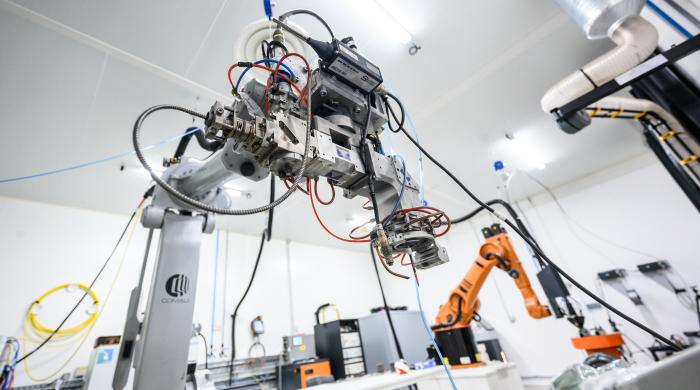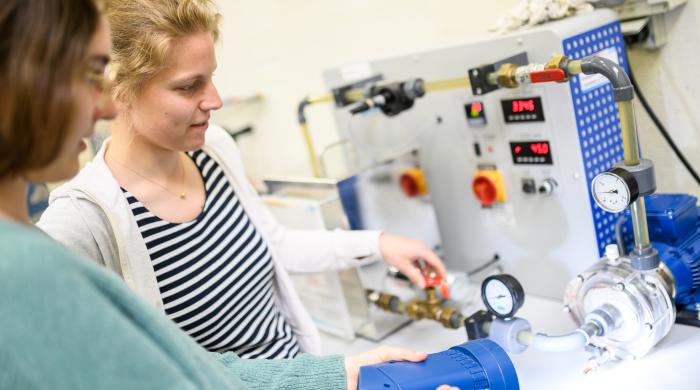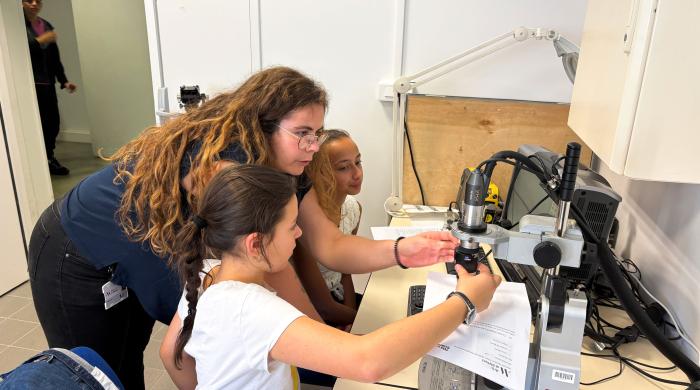
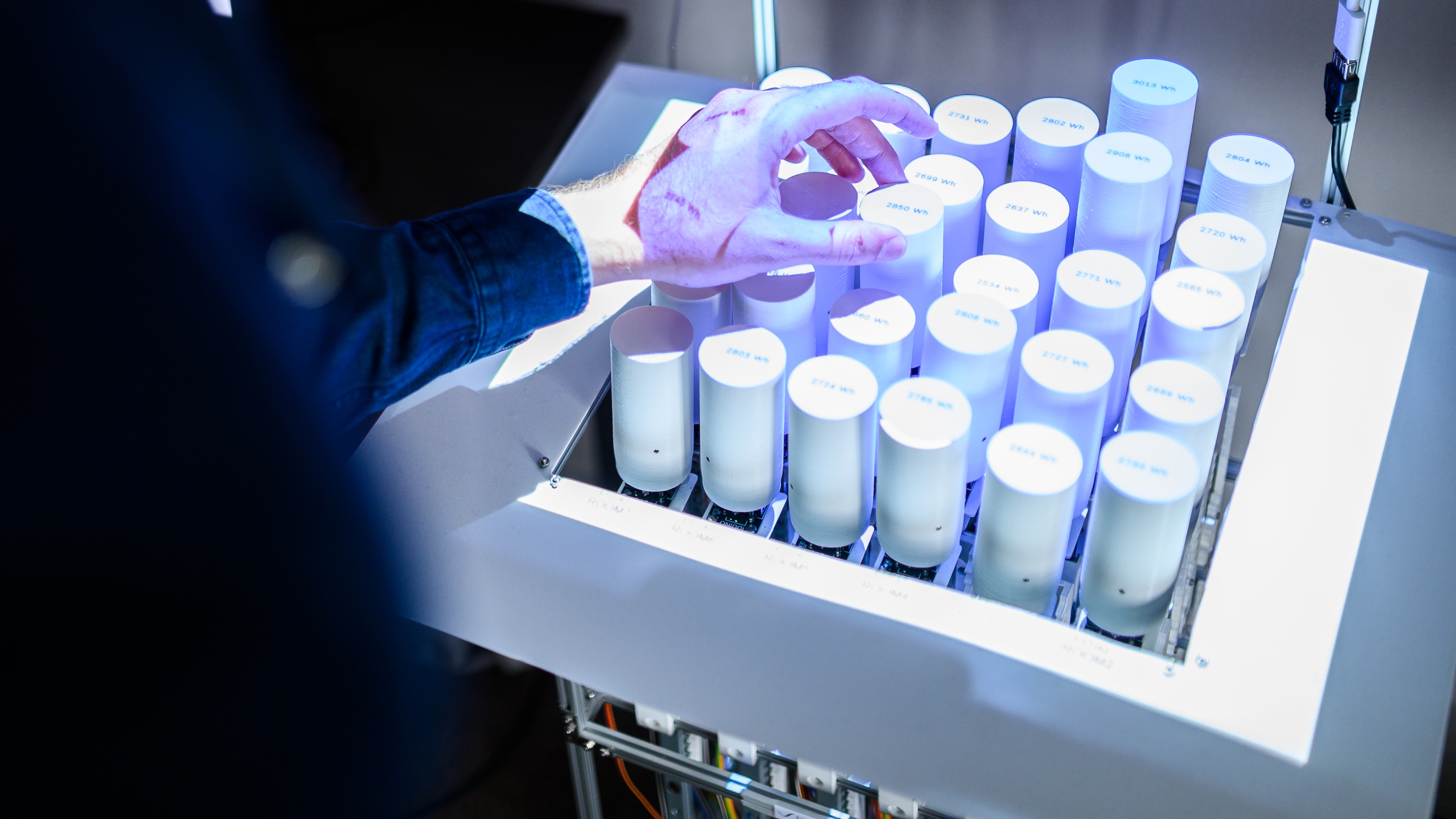
With 15 laboratories located on its campuses, Arts et Métiers all the scientific expertise needed to develop new technologies. Thanks to its close ties with industry, the school is able to meet the needs of the industrial sector.
In an increasingly competitive environment, marked by the accelerating pace of technological progress, industry must become ever more innovative. To address this fundamental challenge,Arts et Métiers cutting-edge research focused on the major issues facing the industry of the future, with applications in four main sectors: transportation, healthcare, energy, and construction.
Our main mission is to support, and therefore anticipate, the needs of industrial environments.
The Strength of Industrial and Academic Partnerships
Two indicators confirm the quality of the research carried out by 15 laboratories and 215 teacher-researchers: numerous scientific publications in leading international journals (the school's impact in the field of engineering in France and Europe has increased by 30% over four years, according to an IPERU survey), and partnership-based research in the form of industrial contracts.
 Thanks to its locations throughout France, Arts et Métiers research activities that are closely aligned with local communities. Operating in network, the laboratories thus benefit from a wide range of expertise. This strength enables them to align research priorities with the needs of industry, while taking into account economic, societal, and environmental factors.Arts et Métiers its academic partners benefit from the prestigious Carnot Institute certification for their research initiative ARTS—Research Initiatives for Technology and Society, in full Ivan Iordanoff, Deputy Director General for Research and Innovation. He acknowledges the quality of basic research and its direct applications for businesses."
Arts et Métiers A Key Player in the "Industry of the Future" Alliance
 The vitality of research depends largely on the monitoring efforts of faculty members, who identify the scientific and technological topics most likely to lead to innovation. “ It is on the basis of this ongoing work that laboratory directors set research priorities," explains Ivan Iordanoff. In addition, my role is to identify promising areas based on the expectations of our industrial partners in order to confirm and expand upon the research priorities of our laboratories. This approach of constant interaction enables Arts et Métiers to position itself Arts et Métiers all initiatives led by the Industry of the Future Alliance. "
Laboratory Research Careers: Careers and Opportunities
Pursuing a career in research atArts et Métiers means choosing to apply science and technological innovation to address the major challenges facing society and the industry of the future. Scientific careers within our institutions offer premier opportunities to push the boundaries of knowledge in strategic fields: solid and materials mechanics, fluids and energy, design and industrialization, mathematics and information systems, and health engineering. Each research career allows you to combine scientific excellence with practical applications.
What are the key roles in a research laboratory?
Arts et Métiers 15 laboratories rely on close collaboration among highly qualified, multidisciplinary teams, in which each member plays a pivotal role in the innovation ecosystem:
- The Faculty Member: A central figure in the school, he or she divides their time between imparting knowledge to engineering students and conducting cutting-edge scientific research. He or she ensures that the latest technological discoveries are directly incorporated into our programs.
- The Researcher (Research Associate or Research Director): Fully dedicated to scientific research, this individual leads national and international research projects, overcomes complex technological challenges, and publishes findings on advances in their field.
- The Research Engineer: An indispensable technical expert, the Research Engineer is responsible for the design, development, and implementation of the institution’s state-of-the-art technological and experimental platforms. He or she translates theoretical concepts into digital simulation tools or physical experimental setups.
- Ph.D. Students and Postdoctoral Researchers: As young research professionals, they spend several years developing unique expertise in a key subject area, very often through close collaborative research with industry partners.
How do you become a researcher or a research engineer?
To help students pursue a career in cutting-edge research in the field of engineering sciences, Arts et Métiers a progressive and clearly defined path:
- The National Master of Science degree or the Engineering degree: This is the essential starting point. The Grande École Program, as well as our National Master of Science degrees, place a strong emphasis on research, combining in-depth theoretical instruction with initial hands-on laboratory experience.
- The Doctorate (Bac+8): To become a researcher or research engineer, completing a dissertation is the defining experience. Completed over three years withinthe Sciences des Métiers de l'Ingénieur (SMI) Doctoral School, the Arts et Métiers Ph.D. program Arts et Métiers students in the real-world challenges faced by companies. A true career accelerator, it equips students with the scientific expertise that is highly sought after by both the academic world and cutting-edge industrial sectors.