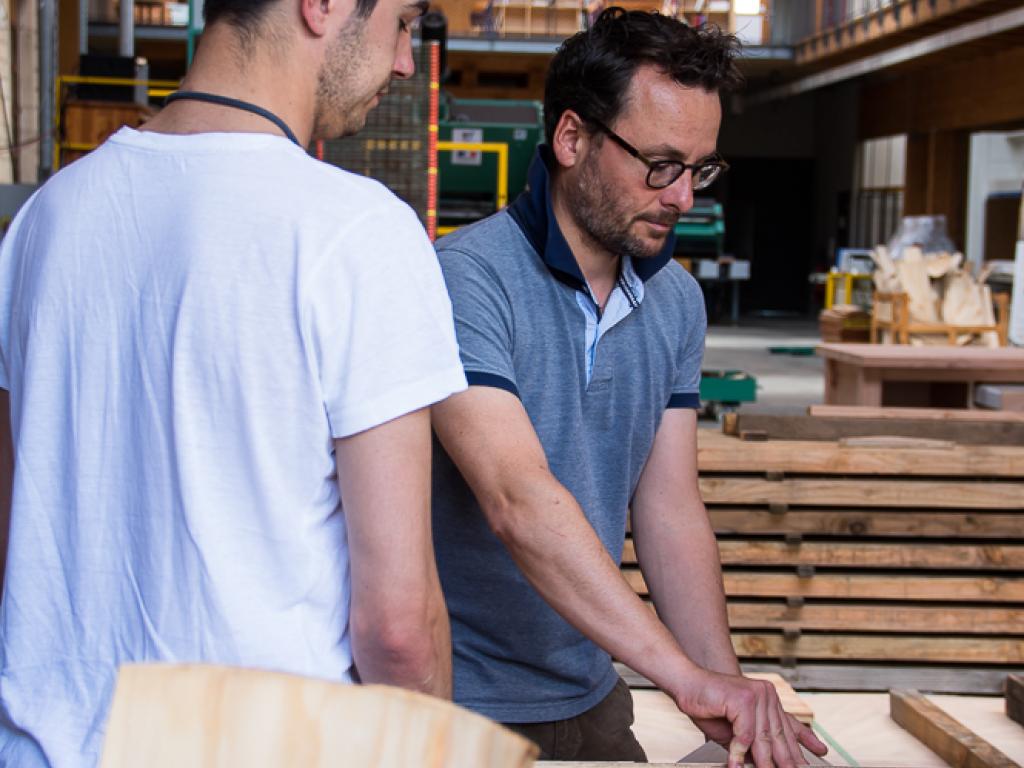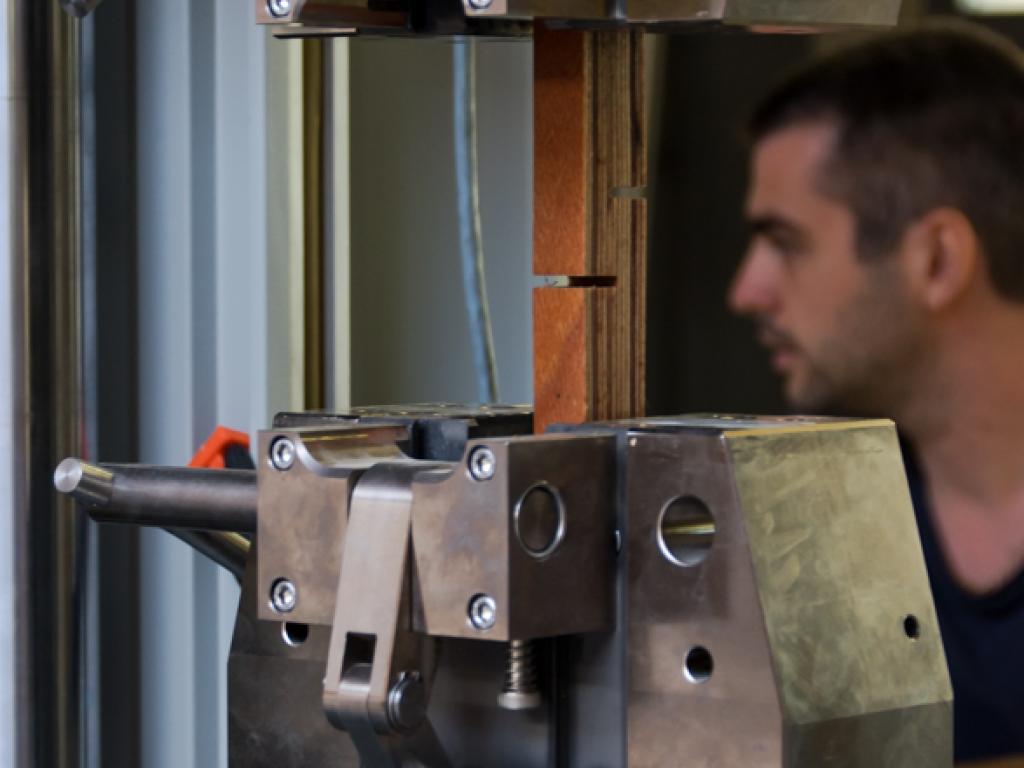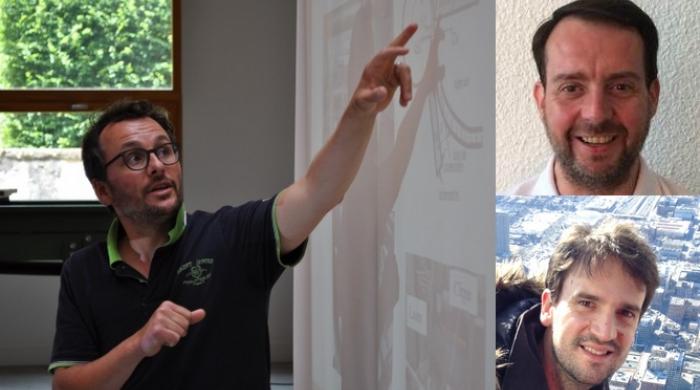
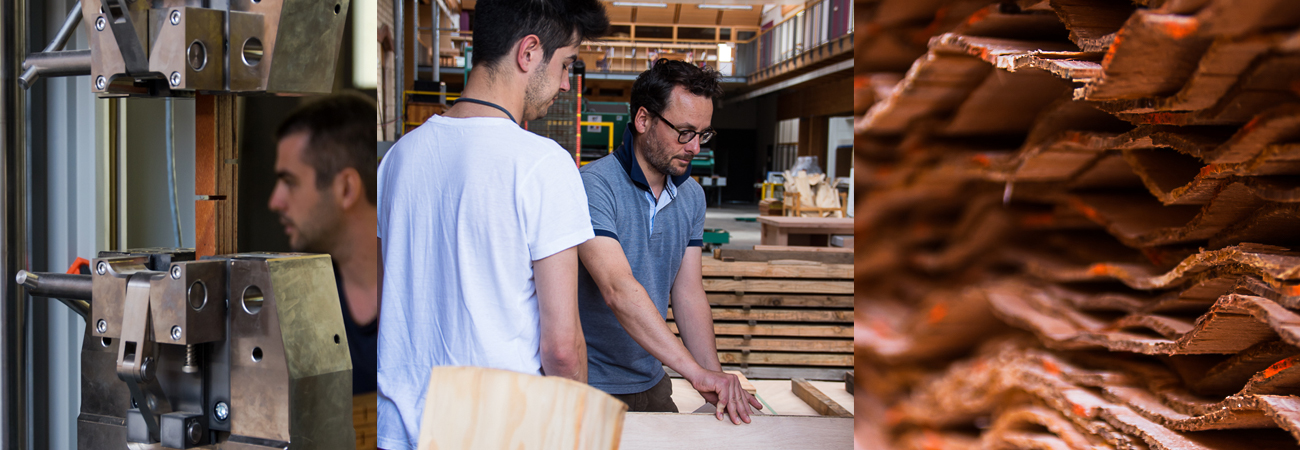
Louis DENAUD, HDR lecturer and researcher at the Arts et Métiers campus Arts et Métiers Cluny and winner of the Institut Carnot Arts Partnership Research Award, discusses the development of the industry of the future. He is delighted that the institution has decided to prioritize short supply chains and limit the environmental impact of industrial activity, as these issues define the DNA of the LaBoMaP Wood team.
To each their own local resource
Behind the title "To each their own local resource" of the GDR Science du Bois edition that took place in Cluny in 2018, there is the idea that wood is not necessarily a local resource but that for ecological and economic reasons it should strive to (re)become one.
Today, wood is used in construction, packaging, and furniture, says Louis Denaud.
The challenges of our scientific approach lie in:
- The transformation of local wood resources, which are heterogeneous and highly variable: "Two boards from the same tree can be radically different, " explains Louis Denaud.
- The process of optimizing the physical and chemical characteristics of wood. In order to best adapt local wood resources to their intended use, it is necessary to understand the initial characteristics of the material and master its transformation. This approach is based on traceability and optimization methods associated with the industry of the future, adding the aspects of sustainable development and short supply chains inherent to local wood.
To address these two issues, we must go through the industrialization system.
Wood: a local resource for sustainable construction
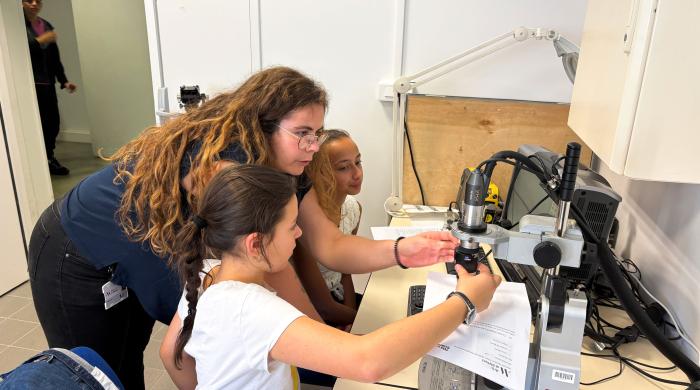
The Cluny campus trains Arts et Métiers engineers Arts et Métiers their third year in the field of "Wood: a local resource for sustainable construction." One of the objectives of this training program is to guide engineers specializing in mechanics and production engineering toward the wood processing and construction industries.
Today's consumers are concerned about their environmental impact and are sensitive to short supply chains. Woodworking professions often bring to mind craftsmen and cabinetmakers. Arts et Métiers engineers Arts et Métiers contribute to the essential role of the wood industry in responding to societal and environmental challenges through an industrial model based on local resources.
His generalist training combining mechanical engineering and industrial engineering, his broad vision from design to manufacturing to the end of a product's life, and his ability to work in a team make him an essential part of sustainable industry. By getting involved in the wood industry, he can play a key role in the conversion from linear industry to the sustainable industry of the future.
Photos (c) Marion Larguier