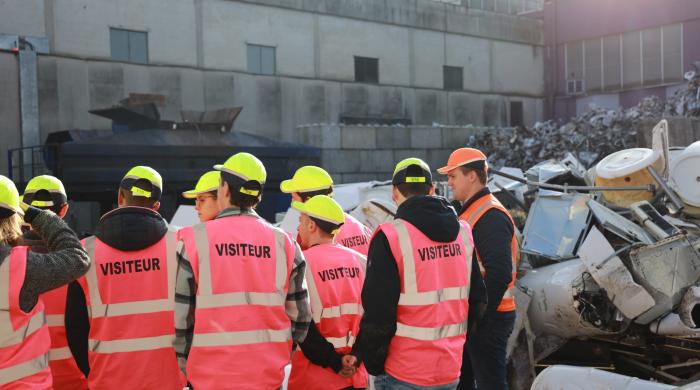
The "Urban Mines" research and teaching chair was created in 2014 by theeco-organization ecosystem in partnership with the ParisTech Foundation and three prestigious engineering schools: Arts et Métiers, Chimie ParisTech, and Mines ParisTech. Its aims to build a truly circular economy that respects the environment and citizens. It seeks to explore, discover, and exploit materials from a new type of "mine" found in our cities: WEEE (Waste Electrical and Electronic Equipment).
Strategic but limited resources
We all know that there are many different components and materials in our cell phones and, more generally, in the electrical and electronic equipment (EEE) that surrounds us in our daily lives.
Indium, for example, enables touchscreens, tantalum is used in capacitors in microelectronics, neodymium is used in hard drives, yttrium in lasers, etc. These elements are called "rare earths" because their resources are sometimes extremely limited.
We also use precious metals such as gold and silver, particularly for soldering and electrical contacts, due to their conductivity.
There are around sixty different elements in our cell phones, most of which are strategic for electronics and found in very limited deposits.
Consideration by the European Union
We depend on these elements, whose resources are running out, which are integrated into EEE and which also pose a danger to the environment. The materials that make up these EEE (ferrous and non-ferrous metals, rare metals, glass, plastic, etc.) and in which these dangerous and strategic elements are incorporated also have great potential in terms of recycling.
To address these economic and environmental challenges, the European Union defined the framework for the management of waste electrical and electronic equipment (WEEE) through a directive dated January 27, 2003.
The WEEE collection and recycling system has been operational in France since 2005 for professional WEEE and since 2006 for household WEEE. It is the responsibility of the eco-organization ecosystem, which is financed by the eco-tax paid on the purchase of any household electrical appliance (large or small), any IT and telecommunications equipment (TVs, PCs, cell phones, etc.), and any electrical or electronic tools (power tools).
A call from Ecosystem for a research chair
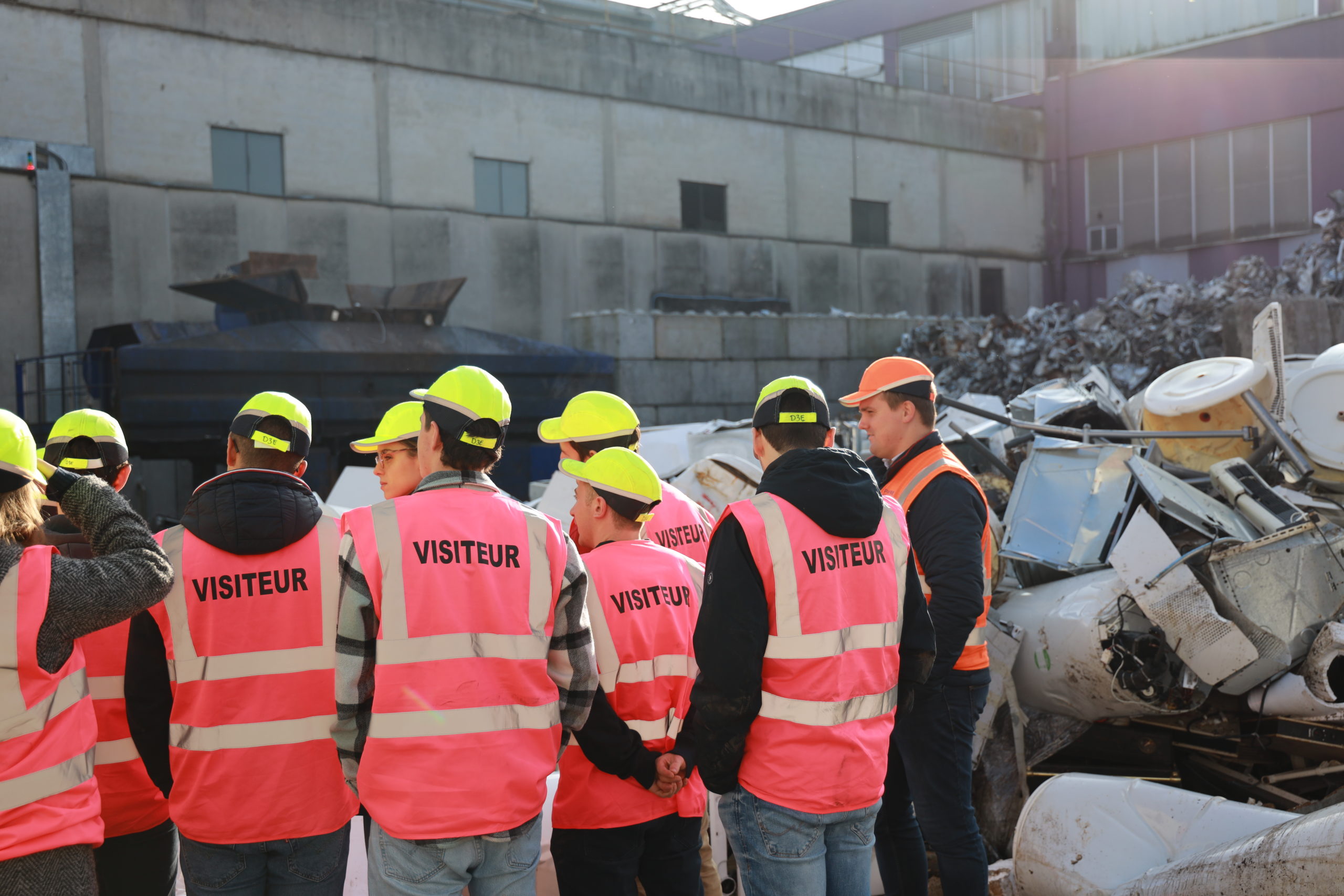
The problem is that all these elements are very difficult to separate, and it could even be said that the technologies used to separate components are often more complex than those used for mineral extraction!
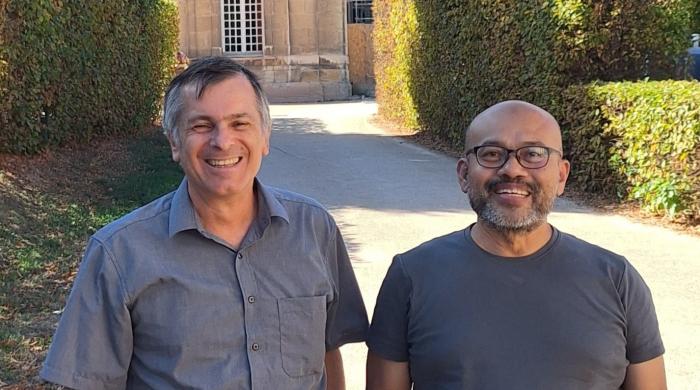
Daniel Froelich, university professor, Arts et métiers Institute Arts et métiers Chambéry.
These components include a large quantity of plastics, particularly plastics containing brominated flame retardants. There is also a challenge in separating these plastics from each other for recycling purposes, as the recycling rates required by European regulations cannot be achieved without recycling the plastics contained in this type of product.
In 2013, ecosystem decided to create a research chair and called on three schools: Chimie ParisTech to work on new processes for separating strategic elements, and Mines ParisTech to work on new economic models for financing recycling.
The ÉcoleArts et Métiers chosen to work on new plastic sorting and recycling processes because the Chambéry institute was a key player in this field at the time. The main challenge was to eliminate plastics containing flame retardants from the recycling process, as these account for around 10% of the plastic materials contained in household WEEE.
As a source of strategic, varied, and continuously renewable materials, WEEE are veritable "urban mines" that are innovative, readily available, and widespread in our society.
The Urban Mining Chair was created on the initiative of ecosystem in partnership with the ParisTech Foundation and three schools, including Arts et Métiers. Its first season runs from 2014 to 2019.
A resolutely circular approach for season 2: 2019-2024
Both schools, Chimie ParisTech and Mines ParisTech, have the same scientific focus, but the former focuses more on recycling, while the latter focuses more on the circular economy and new business models.
From the perspective of plastics, as addressed by Arts et Métiers, the focus is more on the "life cycle" dimension, i.e., not only on the sorting process but also on the channels to be established and how to integrate the output of a channel, which is recycled material, into new products. How can we ensure that today's products are eco-designed so that they can be integrated into the supply chain? We are taking a channel-based approach, which will then enable us to provide guidance to ecosystem so that they themselves can give their stakeholders guidance in terms of sorting technologies and strategic plastics to be recovered, taking into account product developments... bearing in mind that there is also an issue with the substances contained in plastics.
We are interested in the life cycle of substances in plastics. We need to anticipate recycling and therefore limit, for example, the presence of certain substances that are harmful to recycling, sorting, and users. It's really a life cycle approach.
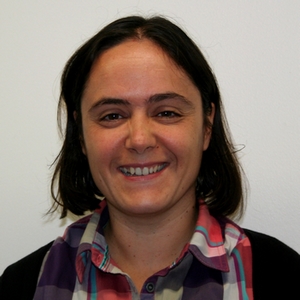
Carole Charbuillet, research engineer, Chambéry Institute, head of the Urban Mining Chair at Arts et Métiers.
This issue of plastics is becoming increasingly important in light of the new circular economy law, which requires environmental concerns surrounding plastics to be taken into account.
The challenge today lies in all the small devices "mixed together."
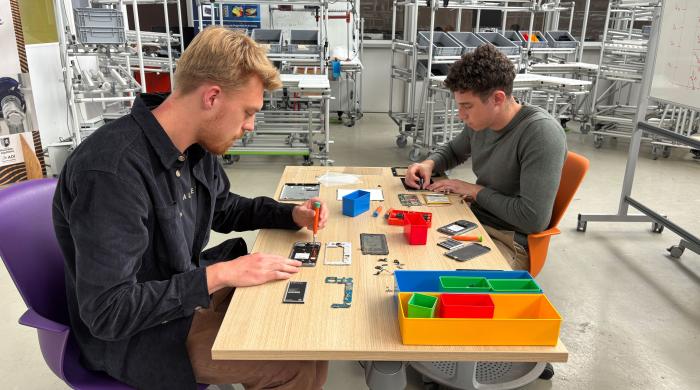
Smartphones, tablets, radios... They contain electronics with "critical metals" issues and plastics with mixing issues (different resins and different additives). Today, these products are often crushed rather than dismantled due to their size (unlike a refrigerator), the diversity and low weight of their components, and the similarity in properties of certain materials. It is possible to separate some components (polypropylene/ABS), but this is not sufficient.
The PIMM laboratory works on aging, the study of plastic degradation, and the development of new recycling processes, particularly the production of new materials containing several unsorted elements.
The I2M laboratorydevelops eco-design indicators in collaboration with the industry.
The Chambéry team, affiliated with I2M, contributes circular economy/life cycle elements: how to design to adapt to the industry and how to design the industry so that it can integrate materials into products. The institute is now a leader in the field of assessing the environmental impact of plastics contained in complex products throughout their life cycle.
A dozen people fromArts et Métiers involved in total.