Contract research is at the heart of Arts et Métiers research policy.The ARTS Carnot Institute, supported by AMVALOR, an Arts et Métiers subsidiary Arts et Métiers to promoting research, aims to support companies in the development of technological innovations.
The Carnot ARTS Institute brings together 23 research and innovation laboratories (including 15 Arts et Métiers laboratories) and supports manufacturers with multidisciplinary scientific expertise and technological research.
Each year,the Call for Structuring Projects ( AAPS) supports scientific renewal in laboratories and promotes the consolidation of the Carnot ARTS institute's network of expertise. These projects are intended for research units carrying out contractual research activities (particularly with micro-enterprises, SMEs, and mid-cap companies).
Three flagship structural projects have been selected under the AAPS.
RehabbyExo
After a stroke, 50% of people with lasting effects find it very difficult or impossible to walk 500 meters. Rehabilitation is therefore crucial in helping them regain their mobility.
In this context, the laboratories of the Carnot ARTS Institute, in partnership with Bordeaux University Hospital, are working on a project called RehabByExo, which aims to develop an exoskeleton for clinical research into the rehabilitation of patients with severe hemiplegia, with a view to helping them regain functional walking abilities.
How will this exoskeleton work? A device with sensors to collect signals will be placed on the non-paralyzed limb and on the paralyzed limb in order to analyze the motor deficit in real time. Robotic rehabilitation will thus be able to assist walking movement rather than impose it. The patient will receive sensory information created by the movement induced by the exoskeleton, but will also be able, depending on their residual motor abilities, to trigger and voluntarily participate in the assisted walking task.
The LAMPA, IBHGC, LISPEN, and LAMIH laboratories are leading the project.

Smart Lifting Surfaces
The "Smart Lifting Surfaces" project aims to improve the control of cavitation and vibrations on lifting surfaces under hydrodynamic flow. "Lifting surfaces" refer to thin structures such as turbojet or pump blades, propellers, wind turbine or tidal turbine blades, and hydrofoils. These surfaces can be subject to vibration or cavitation phenomena that lead to a reduction in service life due to fatigue or erosion. Furthermore, vibration and cavitation are also responsible for a reduction in aerodynamic or hydrodynamic performance, as well as a reduction in acoustic discretion.
Rather than modifying the geometry of the structures in question, the solutions envisaged are based on the use of so-called "active" materials (shape memory alloys, piezoelectric materials, electroactive polymers, etc.). Through static or dynamic control, it then becomes possible to modify the behavior of the structure in its environment. The ultimate goal of this four-year project is to develop an industrial-scale demonstrator to validate the proposed solutions.
All machines equipped with propellers (boats, submarines, airplanes, helicopters, wind turbines, etc.) will be able to benefit from the advances made possible by the "Smart Lifting Surfaces" project.
The IRENav, L2EP, LISPEN, PIMM, LMSSC, LEME & UMI 2958 GT-CNRS are leading the project.
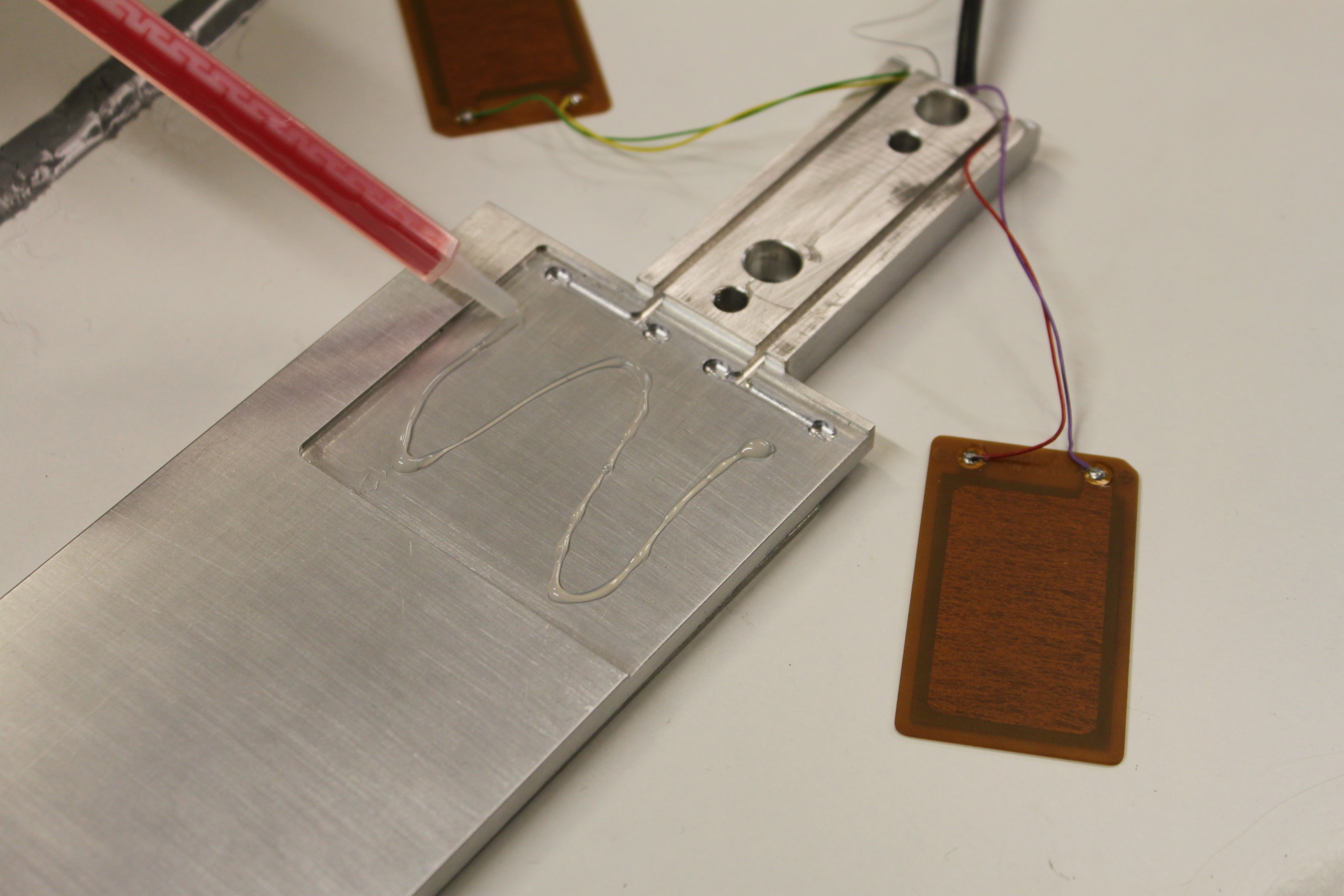
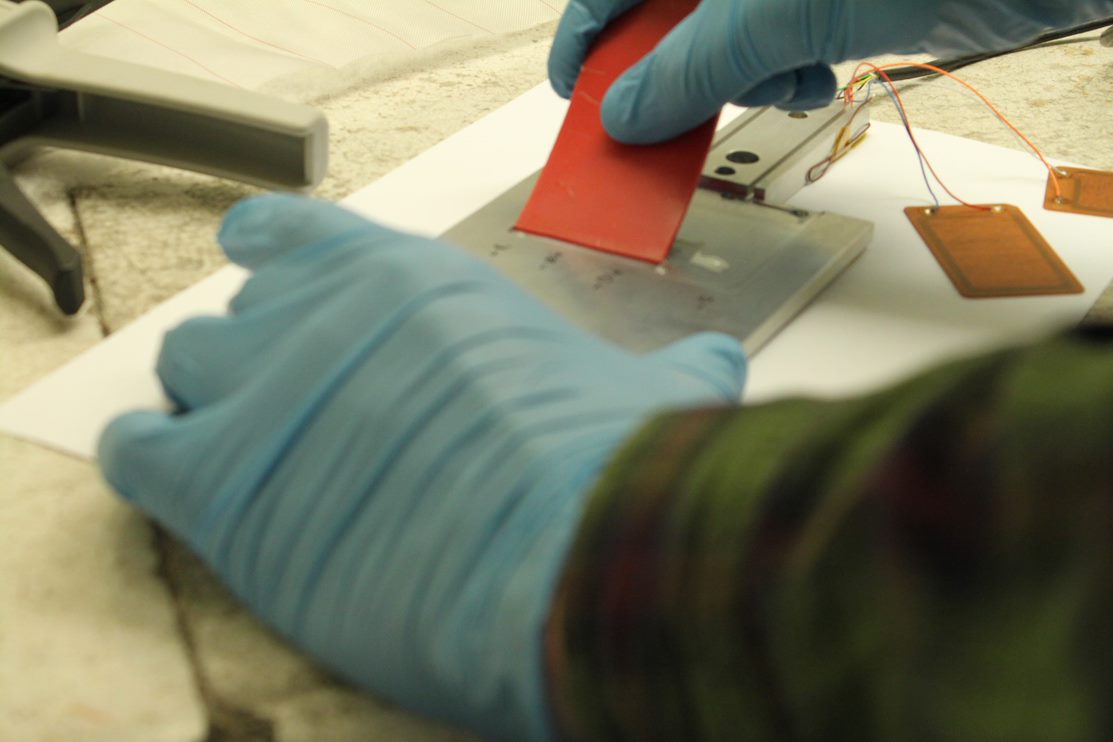
Photo credit: LMSSC - Cnam
Co-simulation for the industry of the future
The co-simulation project for the industry of the future was born out of an observation: the massive production of digital data to represent, design, and anticipate, as well as the real-time interactive dissemination of this data in work environments, makes it possible to optimize interactions between people and systems.
The aim of the "co-simulation for the industry of the future" project is therefore to provide engineering and collaborative simulation methods and tools for the industry of the future.
The interconnected system will enable global simulation of scenarios (such as accidents) in the same shared virtual environment.
The project will focus on methods and tools in three complementary areas of particular interest to the ARTS Carnot Institute: collaborative design (for industrial design offices, R&D, and innovation departments), hybrid factory twins (for virtual/real interaction between the system and its production system in the factory with its behavior models), and mobility co-simulation (for studying interactions between vehicles/mobile machines).
The I2M, IRENav, LAMPA, LCPI, LISPEN, PIMM, and LAMIH laboratories are leading the project.
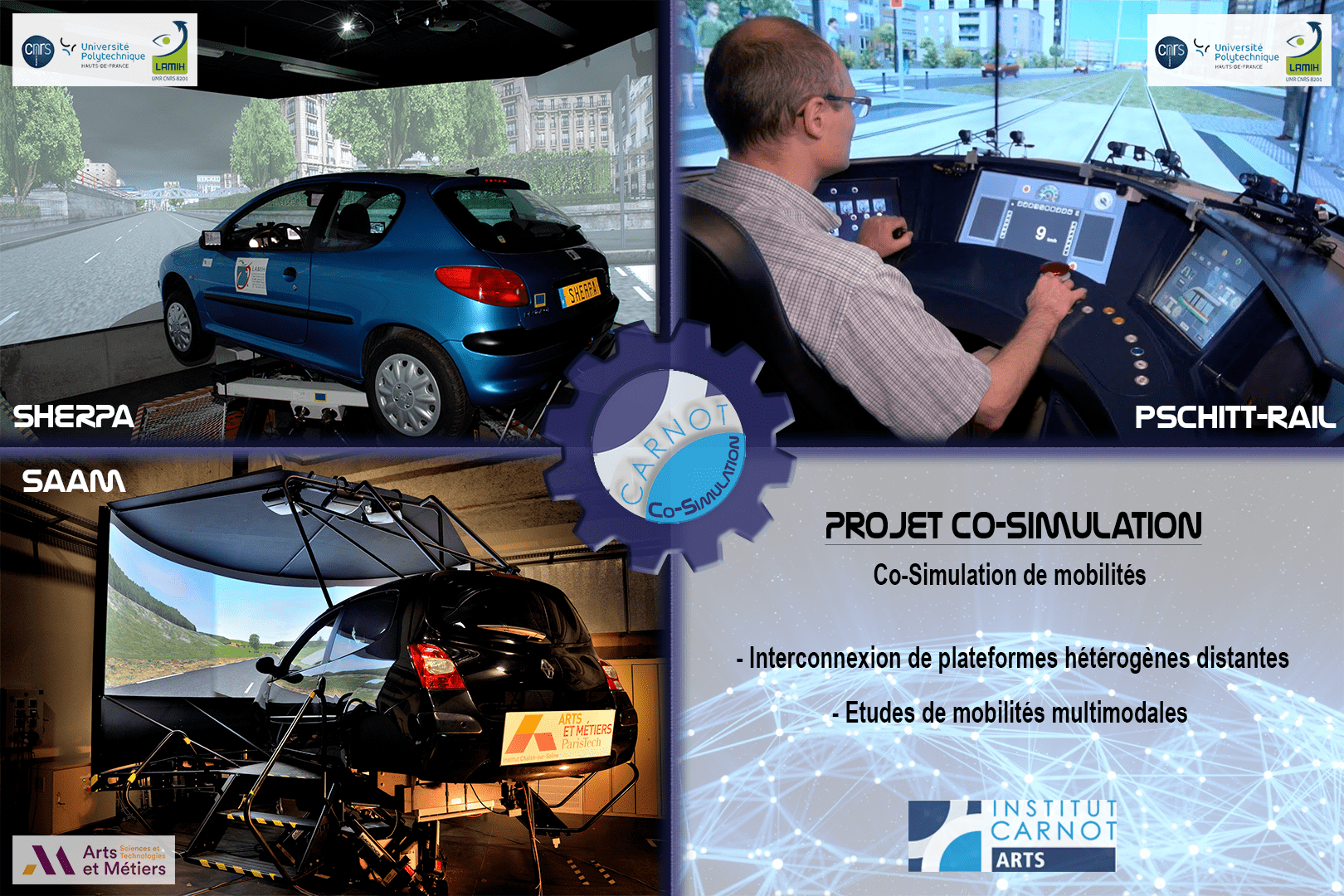
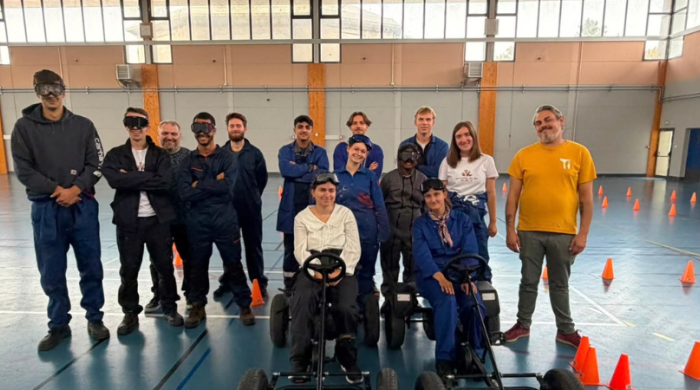
Photo credit: UPHF, LAMIH UMR CNRS 8201 - S. Meyer