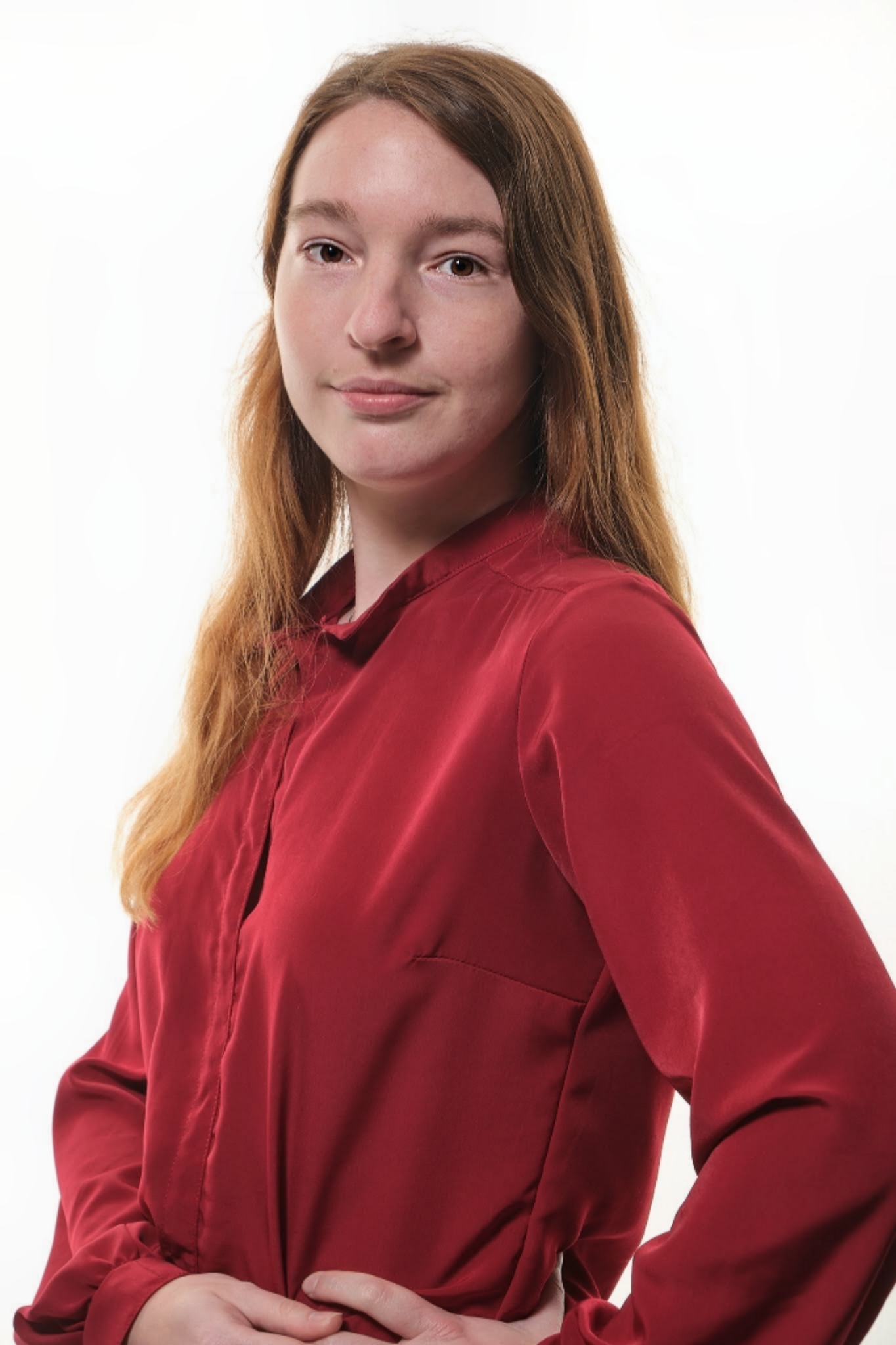
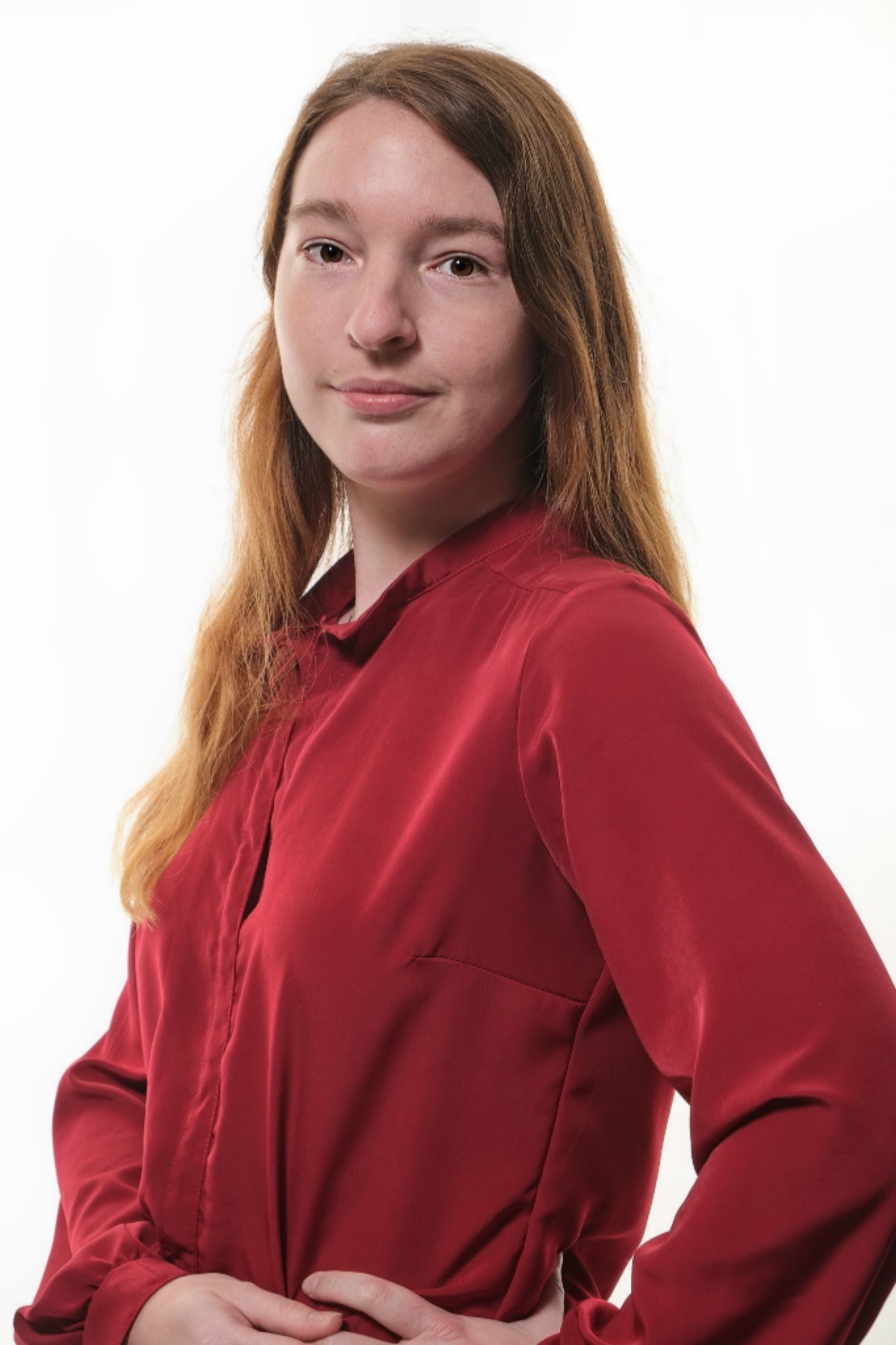
Discover the portrait of a female engineer Arts et Métiers, now working at Vinci Energies.
Tell us about your educational background.
"My decision to become a general engineer took shape fairly early on, in 9th grade, following discussions with my teachers. I wanted to pursue a program that would give me a broad overview and allow me to choose my field of work as late as possible. In that sense, Arts et Métiers all my criteria with the general engineering program offered through the Grande Ecole Engineering Programme."
These were really the only criteria that influenced my choice of education, because at the time, I knew nothing about the school's history, traditions, alumni network, etc.
So I focused all my studies on this choice from a very early stage: I first took a science baccalaureate with an engineering option, where I was able to study subjects that I immediately enjoyed and which confirmed my choice to pursue these studies. I then joined a PTSI PT preparatory class in Tours. I then joined the class of 2014 on the Bordeaux campus in the PGE program.
In my second year of the PGE program, I took on several responsibilities in student life and associations: captain of the volleyball team, co-captain of the handball team and cheerleading squad, and vice president of the Gala. For this last commitment, more than the title of "vice president," I really enjoyed the managerial aspect of the role (organizing, coordinating, and managing 300 students, two hours per week).
That's why, for my third and final year at Arts et Métiers, I decided to pursue a double degree at IAE: a master's degree in "General Management - IAPP," which combined a lot of management, law, accounting, human resources management, etc., and allowed me to round out my engineering background.
How was your time studying at Arts et Métiers a young woman? What made you want to pursue this path?
"In my class, only 10% of the students were women, but there was very little gender distinction. We evolved together and focused solely on the qualities and skills of the students when assigning roles in student life and associations. Our class was really supportive and quite protective of the women. The other students encouraged us a lot to get involved in student associations and the student community. As a result, I have really fond memories of my time at school! Even in prep school, there were few of us in the courses, so we were used to being in a more male-dominated environment.
In addition, I was fortunate to grow up in a family where my parents encouraged my siblings and me to pursue the careers of our choice, without gender distinctions and without promoting certain paths to excellence over others.
Also, I was quite independent and wanted to prove to myself that I had the ability to achieve my career goals on my own.
What has your career path been like since graduating with your engineering degree? And what are your future career goals?
"During my training at Arts et Métiers, my plan was to become a construction manager. But as I met people in the industry, I realized that this job might not be the best fit for me. The Gadz'Arts network was helpful in this regard.
I completed my end-of-studies internship (SFE) in project management at a Vinci company. I then took advantage of Vinci's network of contacts to apply for my first job. In particular, I followed the training program developed by Vinci to become a business manager.
I worked at four Actemium companies, which are part of the Vinci Group. At the end of my first year, one of these Actemium companies hired me. I was responsible for training German colleagues as part of a maintenance contract with Safran in Hamburg, and for passing on suggestions from French clients who were contractors at the Hamburg site. Once this mission was accomplished and Actemium Hamburg was autonomous, I took on new assignments elsewhere: Cegelec Défense Infrastructures & Réseaux in Toulouse, where I have been working for two years now as Deputy Project Manager.
I work on electromagnetic shielding (Faraday cages) for the military. This company can work on projects of varying lengths (from a few months to several years), and the projects are constantly evolving, so I know I won't get bored. I will continue to learn about this science and technology. That's why I want to stay with this company for as long as possible. The company aims to be a key industrial player in this field for the DGA (French Defense Procurement Agency). This is a real advantage because our positions are really well supervised and protected, allowing us to thrive and stay there."
Looking back now, what qualities and skills acquired during your training have you been able to put to good use in your various professional experiences?
I would say managerial skills for the most part; we learn to adapt to each member of our team.
Then there's the ability to get by with computer tools: I've programmed the automation of several of my tools. Curiosity about learning is something we've learned to develop at school.
And, of course, the concepts and all the knowledge from the core training program: electricity, hydraulics, pneumatics, etc. Without being an expert on any specific subject, I am able to understand all the topics discussed in team meetings, for example, and I am able to grasp each stage of implementation.
Why Vinci Energies? What are their commitments to the professional integration of women?
"There is no gender distinction; everyone finds their place naturally. The great strength of our team is dialogue. Mistakes are accepted, and we learn to communicate openly with each other in order to move projects forward collectively in the best possible way. In terms of legitimacy, whether you are a man or a woman, I think it is something that is acquired over time.
I have rarely had difficulty imposing my choices; I think it all depends on how you go about it. I like to find out about the tasks of each member of my team, then I put my own knowledge aside to "prove my credentials" and humbly benefit from the experience of my colleagues. I prefer to be a leader rather than a boss who imposes her decisions.
In addition, Vinci has an effective integration and diversity policy. In particular, through the Women's Hub (OCCITANIE), they regularly organize conferences and small workshops to support women in developing and advancing in their careers.
Finally, I think that balance is necessary when working with both men and women, because we don't all have the same sensibilities and ways of seeing things. We therefore complement each other easily when we compare different points of view.
Do you participate in initiatives to raise awareness of scientific and technical careers among young women?
Yes, every year I take part in the "Live My Life as an Engineer" program organized by the school in Bordeaux. Working in pairs with another alumnus, we visit classes to present our profession and our career paths.
The presentation usually takes place in the morning, but I like to stay in the afternoon to continue the discussion on a more individual and in-depth basis with any students who wish to do so. It is very rewarding to share our perspective and experience as recent graduates with them.
What message would you give to young women who are hesitant or considering studying engineering?
"Being an engineer means having the freedom to choose how to solve a problem or how to meet a need. Today, I have the freedom to make choices, to organize myself as I wish in order to fulfill the requests of my clients and my management. That's what I like about my job."