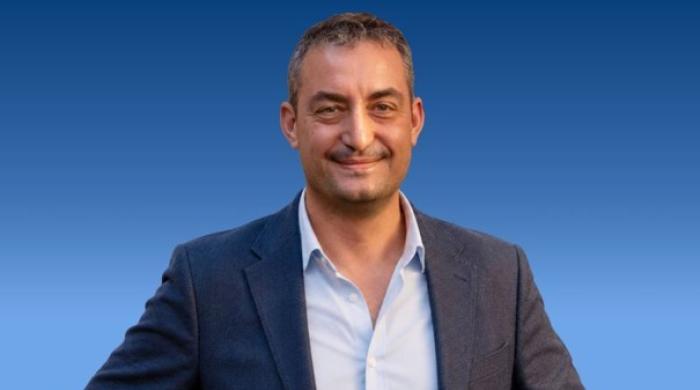
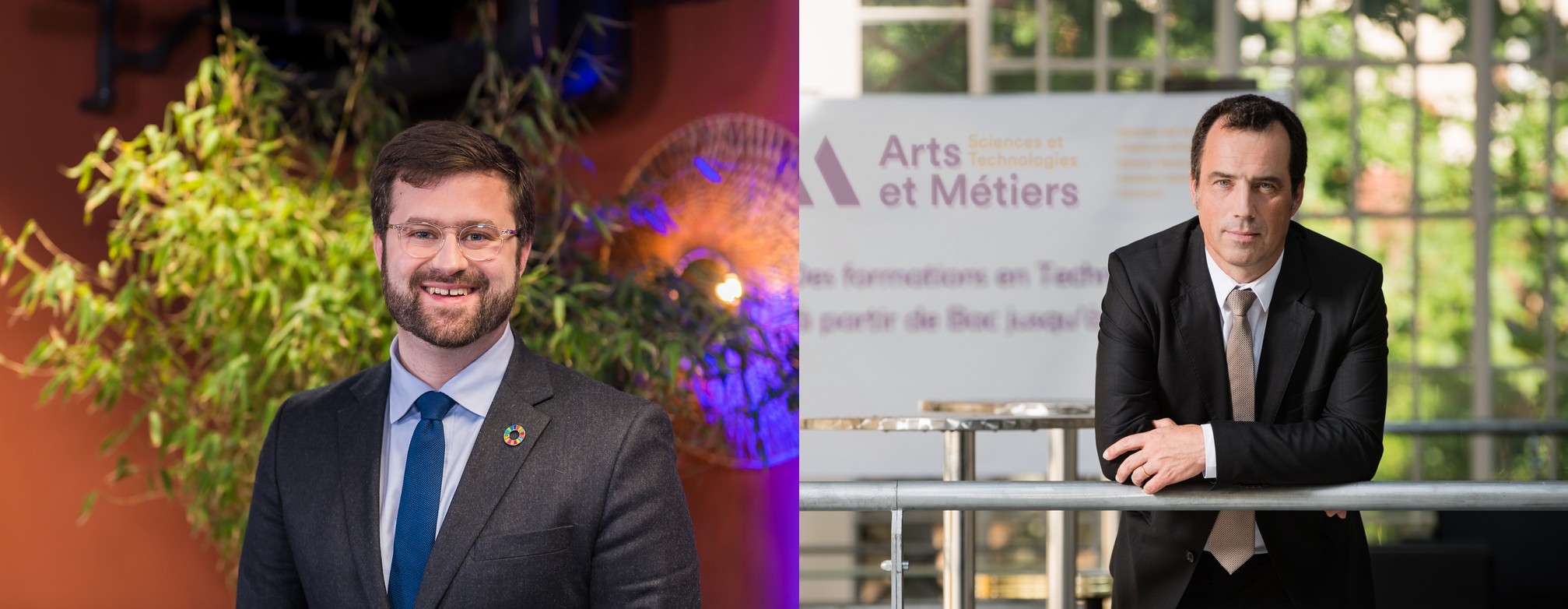
The third edition of the Sustainable Development Meetings (RDD) will kick off on September 16 under the patronage of Yaël Braun-Pivet, President of the National Assembly. This will be an opportunity to meet Thomas Friang, CEO of the Open Diplomacy Institute, which founded the RDD, and Laurent Champaney, CEO ofArts et Métiers, a partner of the event.
What is the purpose of the Sustainable Development Meetings?
Thomas Friang: We want to enable as many French people as possible to form an informed opinion on the complex issues surrounding sustainable development through debates with leading experts, committed intellectuals, and the politicians responsible for these major issues. The aim is to give them the tools they need to make informed choices as consumers, citizens, professionals, and so on.
The event brings together researchers, experts, business leaders, and public decision-makers to ask the essential questions about the transition to a more sustainable society. All topics are explored: economic transformations, social challenges, political changes, and geopolitical battles that shape the environmental challenge.
This is a free event, open to as many people as possible. The first day, which will take place at the National Assembly, will be broadcast online. This year, the national launch coincides with the official anniversary of France's adoption of the United Nations Sustainable Development Goals.
Then we embark on a veritable tour of France, with six stages—including one in Bordeaux co-organized with Arts et Métiers October 7 on the circular economy—before a European conclusion in Berlin!
Why Arts et Métiers a partner of the RDDs?
Laurent Champaney: I find the RDD approach, which involves tackling the problem in all its complexity and surrounding yourself with specialists, interesting. Too often, sustainable development is viewed through a narrow lens.
Industry is a sector where there is much to change. Arts et Métiers contribute its knowledge of industrial issues and the training of future managers to the debate. But this must be part of broader public policy.
And for us, participating in these meetings gives us a better understanding of all the stakeholders and debates involved in moving towards these public policies.
What is the program for this third edition of the RDD?
Thomas Friang: This edition will be an opportunity to take stock of the 17 Sustainable Development Goals set by the United Nations. The results are not positive because, over the past two years, the transition has slowed considerably, first due to the health crisis and then the war in Ukraine, two global events that have reversed all progress curves.
But this event will also be an opportunity to give a voice to NGOs and companies whose initiatives offer hope, and to engage in dialogue with politicians, from the local to the global level, on the best way to get things back on track.
That is why we have named this edition "Entreprenons la France de 2030" (Let's build the France of 2030).
This shows that the entire nation is concerned and that everything depends on our sense of initiative. This is also the meaning we must give to ecological planning: it must enable everyone to contribute to a larger project, the plan to transform the country. This plan must also include a social dimension to ensure a fair transition (the wealthiest 10% are responsible for 50% of greenhouse gas emissions) and must never forget the challenge of adaptation: with global warming, physical challenges will change our infrastructure and therefore the way we think about our investments, research, and development.
What actions is the institution taking to get involved in this initiative?
Laurent Champaney: First of all, we are starting to roll out information and awareness-raising initiatives for our staff and students, for example with Fresque du Climat workshops and, at the end of the month, an afternoon of debates with The Shift Project. In addition, we are committed to obtaining DD&RS (Sustainable Development of Higher Education Institutions) certification and have signed the Grenoble agreements.
In terms of training, we want to educate our students to decarbonize industry by becoming active players in the field who create and implement impactful solutions. To this end, we want to train them in the technological trajectories of the four "Transition(s) 2050" scenarios developed by Ademe (more information). These four scenarios take different paths and correspond to different societal choices, but all lead to carbon neutrality by 2050. This proposal will be reviewed by our Board of Directors at the end of the month.
In fact, we are committed to changing the way we do things, training and informing our students and staff. We will not make the transition without new skills for our young engineers to build sustainable infrastructure, smart cities, and more.
What would be your wish for the slogan "Let's build the France of 2030" to apply?
Laurent Champaney: Having a clear public policy on ecological planning. For example, there are no standards in sustainable development, even for measuring carbon impact. We need tools that are stable over time and can be integrated into training. That's the missing piece we need to move forward.
Thomas Friang: I completely agree. We need to clarify ecological planning in order to get everyone on board: we need a framework to ensure we are all moving in the same direction, with a clear course, objectives, and standards. Before the RDDs began, the Open Diplomacy Institute published a note on ecological planning (downloadable here).
This is the starting point for this discussion, which we will continue at each stage of the RDDs, debating openly with—I hope—as many French citizens as possible.