Stéphane Chevalier, professor and researcher in Bordeaux, presents the challenges of hydrogen technology and the structural projects implemented by Arts et Métiers this technology.
Why is hydrogen a major technological challenge?
Fuel cells and electrolysers are energy carriers that convert primary energy (wind, solar, or fossil fuels) into electrical or chemical energy: hydrogen.
Hydrogen therefore enables the development of these technologies, which are essential to our energy mix based on intermittent renewable energies, by storing surplus energy or compensating for a deficit in available energy to meet demand.
Finally, hydrogen allows energy to be transported easily and over greater distances than electricity.
What are the current uses of fuel cells and electrolysers?
Fuel cell and electrolyzer technology enables the conversion of hydrogen into electricity and vice versa: hydrogen combines with oxygen in the air to produce electricity, releasing only water.
This technology is now reaching maturity and concrete applications for our mobility and our homes are being designed. However, there are still many scientific and technological obstacles to overcome in order to improve the efficiency, reliability, lifespan, and power density of fuel cells and electrolysers.
What are these locks?
They relate to the efficiency and reliability of these systems. By significantly improving them, it will be possible to reduce the costs of hydrogen production and conversion.
We could summarize the improvement in the performance of these systems as the precise control of mass transfer (hydrogen, oxygen, and water), heat transfer (for recovery and cogeneration), and load transfer (choice of catalytic materials).
How does Arts et Métiers position itself Arts et Métiers issues related to hydrogen?
Arts et Métiers on these technologies for several years now. Examples include work on the design of new high-pressure hydrogen tanks and studies on the impact of hydrogen on the properties of metallic materials. With the industrialization of these energy carriers, the school is called upon to play an important role with manufacturers and the scientific community in providing innovative in situ measurement systems, real-time modeling, and advanced design integrating all stages of the life cycle of these technologies.
In concrete terms, Arts et Métiers ' response Arts et Métiers be structured around two main areas:
-
Starting with the existing system and combining it with a sophisticated regulation and control system that maximizes performance in real time by adjusting operating conditions.
For example, a digital twin of an electrolyzer or fuel cell can be created.
-
By collecting data using advanced characterization methods such as in situ imaging (visible, infrared, or X-ray).
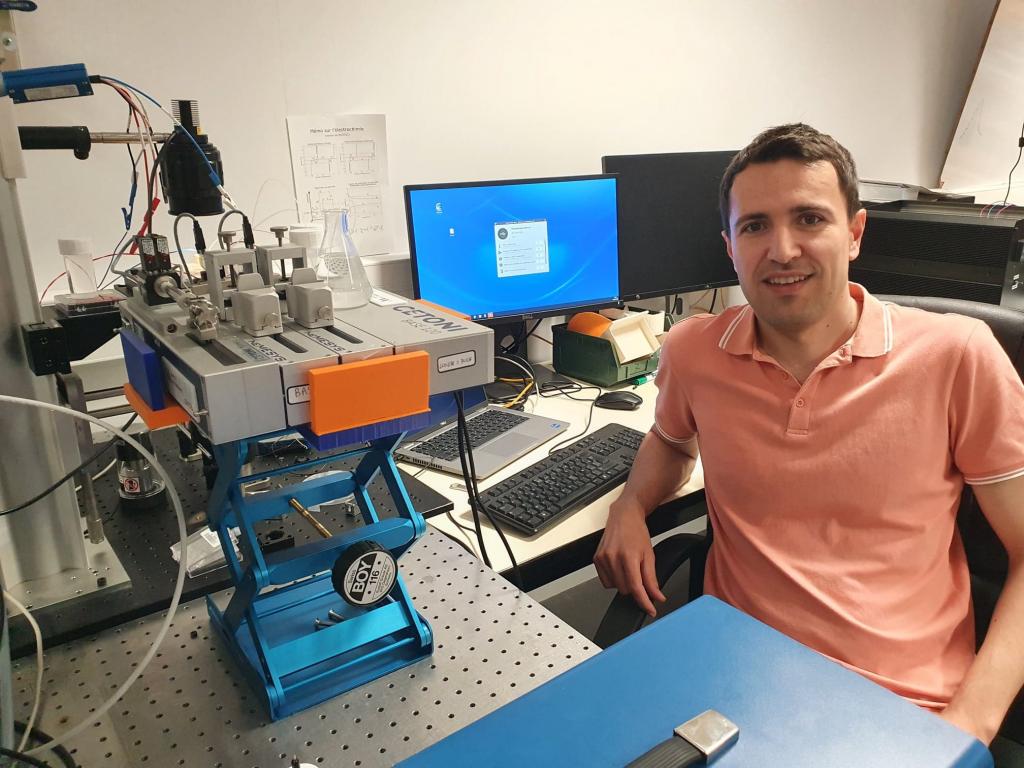
My research focuses on this last area, with the creation of a multispectral imaging platform for in situ measurement of mass, charge, and heat transfer.
Finally, the collection of this data will enable the design of new solutions for these technologies, which is one of Arts et Métiers areas of expertise.
What projects are underway in the field of hydrogen?
There are several: developing an imaging platform, instrumenting a green hydrogen production platform, and thermomechanical characterization of pressurized hydrogen tanks.
This will enable us to develop characterization and modeling platforms that can then be used for training, which is increasingly necessary as hydrogen-based technologies are deployed in our energy mix. In this regard, I am already seeing growing interest among students in the subject of fuel cells (3rd year IPM2D expertise at the Bordeaux campus).
Finally, in order to structure research work on the subject at the school level, a Carnot project for data collection and the construction of a digital twin of a hydrogen chain (production, storage, use) is in the process of being submitted for funding.