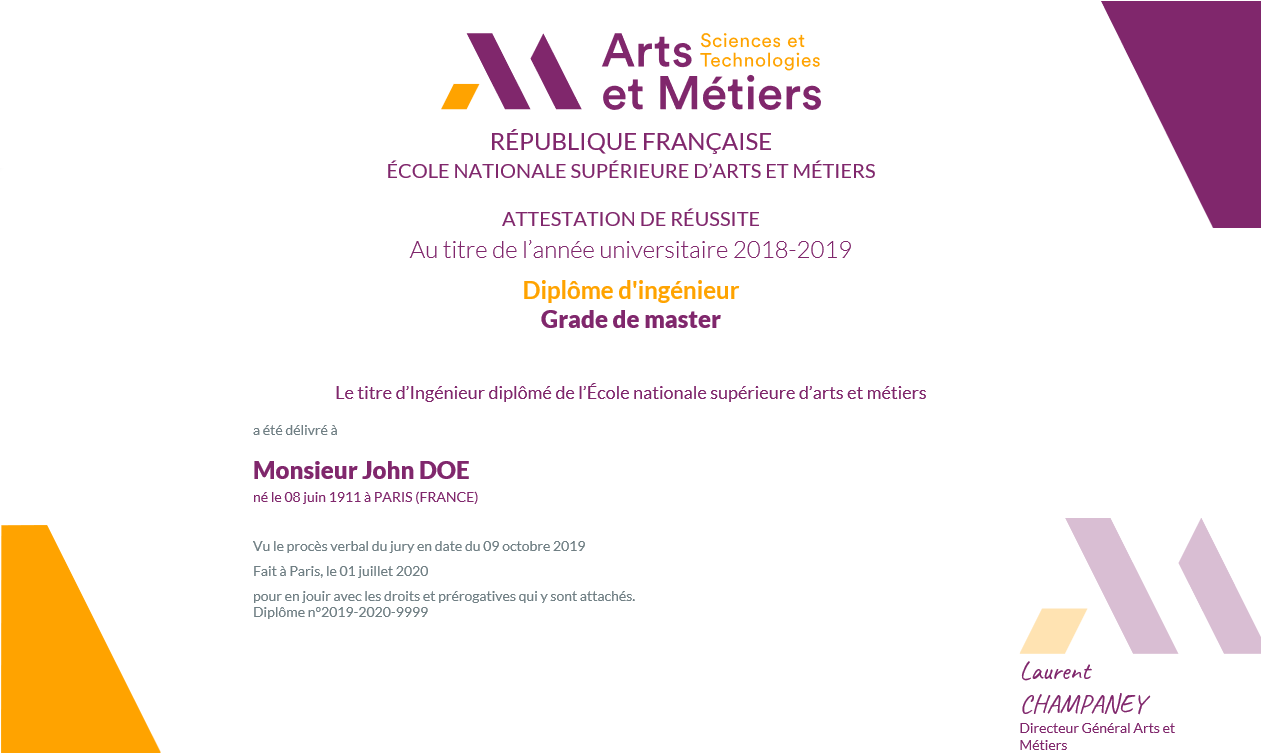
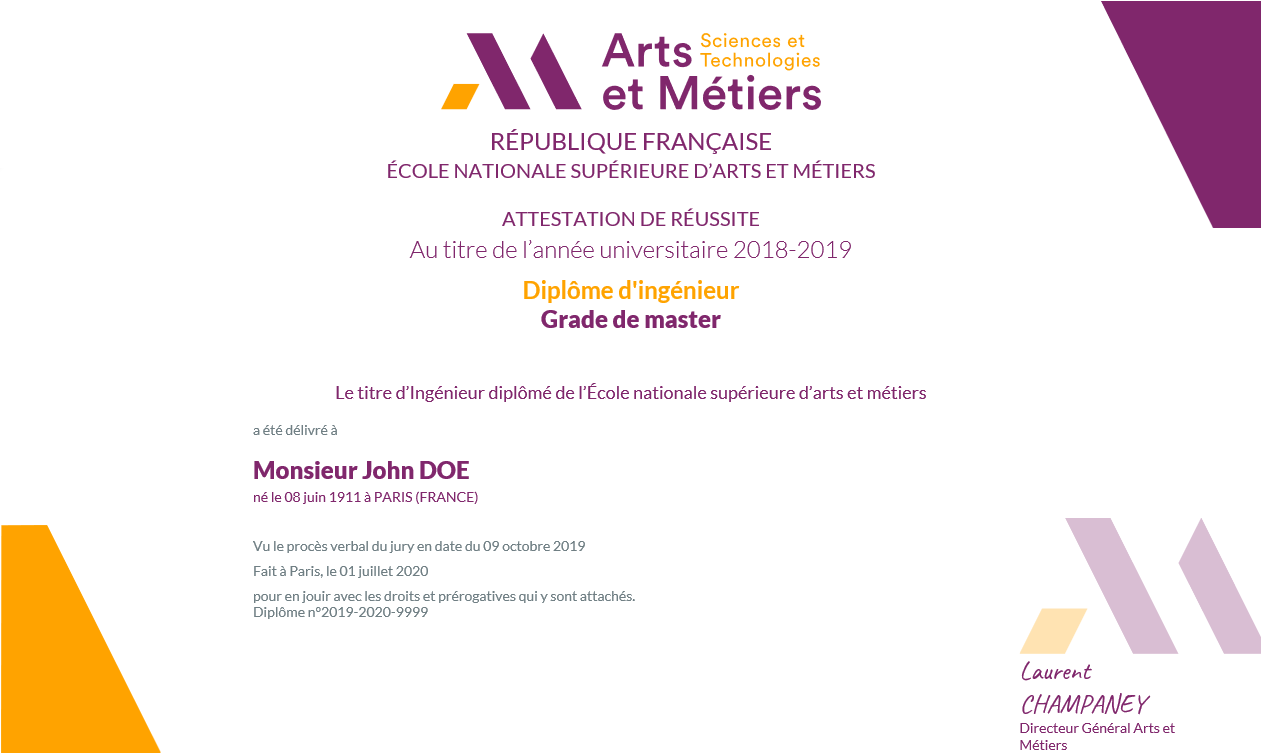
In October 2020, Arts et Métiers Grande Ecole Engineering Programme first blockchain-secured certificates of completion to students in the Class of 2019 of Grande Ecole Engineering Programme . This initiative responds to strong demand from businesses and underscores the institution’s digital transformation.
This project, launched in 2019, aims to combat diploma fraud and provide security for companies when recruiting Arts et Métiers graduates. The certificate of achievement secured by blockchain technology is highly secure and cannot be falsified.
Throughout their careers, Arts et Métiers graduates Arts et Métiers thus Arts et Métiers prove the authenticity of their degrees.
The first certificates were awarded in October 2020 to the 722 graduates of the Grande Ecole Engineering Programme from the class of 2019. This program will then be expanded to other Arts et Métiers programs Arts et Métiers future graduating classes.
Certificates are sent to graduates by email via a unique link. They can retrieve them with a single click and choose to share their certificate on their LinkedIn account (Tutorial).
They can also share it on their CV, by including the unique and secure link to their certified certificate of achievement.