During his visit to Arts et Métiers, Professor Lum Guo Zhan (Nanyang Technological University, Singapore) strengthened ties between the two institutions in the fields of robotics, artificial intelligence, and advanced manufacturing.
What were the reasons that led you to accept this position as visiting professor at Arts et Métiers
The decision to accept this invitation to become a visiting professor at Arts et Métiers AM) was based on both strategic and practical considerations. For nearly two years, our institutions, NTU Singapore and Arts et Métiers, have been exploring the possibility of establishing deeper collaborations in cutting-edge fields such as robotics, artificial intelligence, 3D printing, and augmented reality (AR/VR).. Although there is strong mutual academic interest, we have encountered administrative and legal obstacles that have slowed things down, including the finalization of a research collaboration agreement (MRCA). I felt that being physically present in France would help move things forward more effectively by facilitating face-to-face exchanges with colleagues, administrators, and legal teams.
This visit also gave me a better understanding of the institutional culture and dynamics between the different Arts et Métiers campuses. Although I had already visited Paris, I had never experienced the inner workings of the Arts et Métiers network. I was curious to see how research is structured there, how mobility between campuses works, and how teams work on a daily basis. This first-hand experience now enables me to better guide and support future collaborations and student exchanges on our side.
With regard to Professor Amine Ammar, our current collaboration focuses on setting up a student exchange program. There has been strong interest in establishing academic mobility between our institutions, and I am working with Amine on the structure and feasibility of these exchanges. Although we are not yet collaborating directly on research projects, I see great potential for joint projects in the future.
In terms of research, my current work during this visit is more aligned with that of Professor Sofiane KHELLADI at the Paris campus. We are discussing a project on micropumps and actively identifying funding opportunities to co-develop our research. So, although this collaboration is still in its early stages, the foundations are solid, and the trust established during this visit is, in my view, one of the most important outcomes.
How do you feel after a month since your arrival?
I am very satisfied with this experience; this month has been very enriching. Being physically present in France has allowed me to better understand not only the institution, but also its culture and everyday realities. However, I did encounter some challenges, such as language barriers in the laboratories and logistical problems related to traveling between campuses. That said, these observations are valuable because they will help us better prepare our students for future exchanges. Overall, the welcome was excellent and I learned a lot.
In your opinion, what is the main advantage of international research collaborations? Is there anything in particular that you appreciate about your collaborations with France or with Arts et Métiers
International collaborations allow us to combine complementary strengths. For example, in my case, our laboratory can take care of the experimental part, while Professor KHELLADI's team excels at simulations. TheArts et Métiers teamsArts et Métiers shown great sincerity and real patience over the years, which I deeply appreciate. Such partnerships build long-term trust and bring new perspectives to research challenges. From a strategic point of view, NTU seeks to develop strong partnerships on a global scale, and having France, particularly Arts et Métiers, as a partner is a real asset.
What sparked your interest in robotics? Was it the result of a particularly memorable class or something you read on your own?
Since childhood, I have always been fascinated by robots and anything that moves with intent. During my undergraduate studies at NTU, I enrolled in a program in mechatronics, and I realized that this childhood fascination was well-founded; I really enjoyed learning in this field. Later, during my joint PhD program between NTU and Carnegie Mellon University, I worked on microscopic robots and small magnetic devices, which further strengthened my passion. I was particularly excited by their potential in biomedical applications, such as targeted drug delivery and minimally invasive surgery.
When did you decide to become a researcher?
It's difficult to pinpoint a specific moment. At first, I saw the PhD simply as a logical continuation of my studies. But in my first year, when my supervisors explained to me that research involved solving concrete problems and innovating beyond established knowledge, I began to develop a passion for it. It was around my second year, when I developed my first original idea, that I knew I wanted to continue down this path.
What advice would you give to students interested in a career in research, whether in your field or another?
If I had to share a few essential tips with students who are curious about research, particularly in fields such as robotics or engineering, they would be as follows:
First, we must understand the value of what we do. Research isn't just about publishing articles for the sake of it. It's about pushing the boundaries of knowledge and making real, meaningful contributions to society, whether that's advancing medical robotics, improving manufacturing processes, or addressing sustainability challenges. If you can see the tangible impact of your work, you'll stay motivated even when the going gets tough.
Second, don't be afraid. Research can seem intimidating at first, especially when it comes to coming up with an original idea or solving a problem that no one else has solved yet. This initial uncertainty is normal, and even necessary. But trust the process. Work closely with your supervisors, ask questions, and give yourself time to gain confidence.
Third, be patient. Innovation doesn't happen overnight. When I was starting out, I rushed to come up with ideas, thinking that publishing quickly was the key. Over time, I realized that the most impactful research often comes from deep, critical thinking. It's better to develop a strong, original idea that makes a real contribution to your field than to publish several minor works with little added value.
Finally, expect to encounter obstacles. Rejections, failed experiments, and dead ends are all part of the journey. It can be discouraging at first, but these are all opportunities to learn. Take advantage of feedback from reviewers. Stay humble, stay curious. If you move forward with passion and perseverance, a career in research can be one of the most rewarding paths there is.
About LUM Guo Zhan
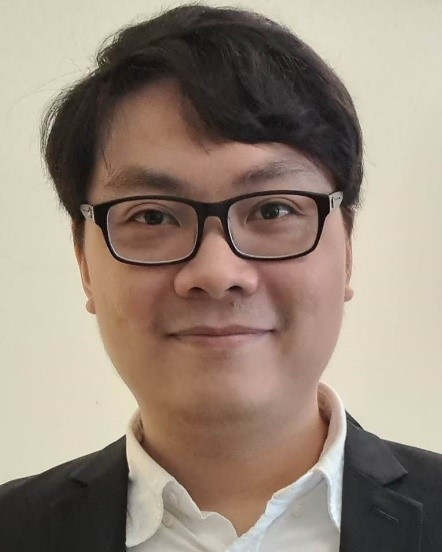
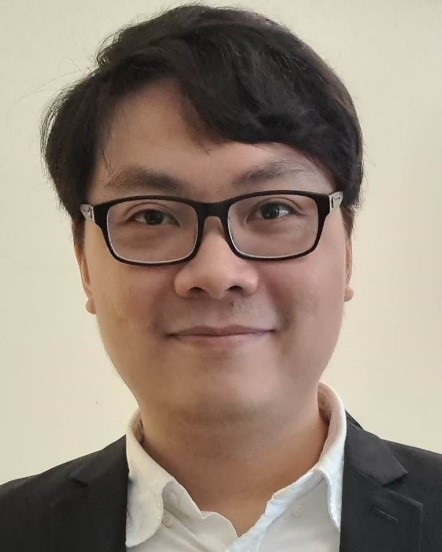 Professor Lum Guo Zhan earned a Ph.D. in mechanical engineering in 2016 through a dual-degree program between Carnegie Mellon University (United States) and Nanyang Technological University (NTU) in Singapore, after earning his bachelor’s degree in mechanical engineering from NTU in 2010. He also earned a Master of Science Carnegie Mellon in 2015. From 2016 to 2017, he worked as a postdoctoral researcher at the Max Planck Institute in Germany. Since 2018, he has served as an assistant professor in the School of Mechanical and Aerospace Engineering at NTU. His research focuses on magnetic micro-robots, soft actuators, locomotion, and bending mechanisms. He has received several awards, including the 2025 Frontiers of Science Award, has published in leading journals such as Nature, PNAS, and Advanced Materials, and has filed several patents. He supervises doctoral students and collaborates closely with industry partners on advanced robotic technologies.