Christos Markides shares his experience as a visiting professor at Arts et Métiers. Combining scientific complementarity and mutual enrichment, this collaboration strengthens ties between researchers and opens up new perspectives in clean energy.
"If you enjoy pushing the boundaries of knowledge and being the first to discover new perspectives, then research is an extremely rewarding path."
What made you decide to accept this position as visiting professor at Arts et Métiers Could you tell us about your collaboration with Professor Michael DELIGANT?
This visit was initially proposed to me by Professor Michael DELIGANT, who informed me of an opportunity for a visiting professorship. It seemed like the right time to reconnect, as we had previously collaborated on topics such as Rankine organic cycles and liquid piston systems for gas compression and expansion. This collaboration had resulted in a joint publication, but we had not had the opportunity to set up a long-term research program. This visit allowed us to explore new avenues, building on our previous work. The complementary nature of our approaches made this visit particularly interesting: Michael's team has strong skills in numerical modeling, while mine is more focused on advanced experimental techniques. His laboratory (LIFSE) also has large-scale testing facilities, which are different from those we use in London, making it an ideal environment for collaboration. During my stay, we shared the progress of our respective research, identified common interests, and began discussing future joint proposals—both for short-term projects and longer-term European funding opportunities. This visit was both a reconnection and a strategic step toward more structured collaboration.
How do you feel after a month there?
It was a truly fantastic experience. Logistically, it was simple—being based in London, I could arrive on Monday and leave on Friday evening—which made the visit convenient while allowing me to balance professional commitments and family life. I was warmly welcomed by the group, which created a very pleasant and collaborative atmosphere. The team took the time to show me around the laboratories and the region, and I was able to hold discussions while continuing to follow up on my ongoing work. It was a perfect balance between productivity and inspiration, and I am already looking forward to returning for the next phase of our collaboration.
In your opinion, what is the main advantage of international research collaborations? Is there anything you particularly appreciate about your collaborations with France or with Arts et Métiers
The main advantage is intellectual renewal. Collaborating internationally pushes you out of your comfort zone and exposes you to other ways of thinking and different skills. It is often at the frontier of your expertise—when two researchers from related but distinct fields meet—that the most promising ideas are born. In the caseArts et Métiers, I found the complementarity between our teams particularly valuable. This synergy paves the way for exciting and integrative projects that combine modeling and experimentation on different scales.
What sparked your interest in energy? Was it the result of a memorable class or personal reading?
I have always had two parallel areas of interest. The first is rooted in thermodynamics and the design of energy conversion technologies—from electricity generation to heating and cooling systems. The second is more fundamental and stems from my doctoral work, which focused on laser measurement techniques applied to complex fluid flows. Thermodynamics connects me to concrete energy issues and innovation, while the measurement aspect satisfies my curiosity for discovery and fundamental research. Together, these areas give me a balanced research profile, which I have deliberately maintained over the years.
When did you decide to become a researcher?
I knew early on that I wanted to pursue a PhD—that part was clear—but the decision to become a researcher came during the PhD itself. I found the process of thinking and problem-solving deeply satisfying. I enjoyed tackling challenges with no obvious solutions and felt the excitement of bringing new knowledge to a field. That's when I realized that research was what I wanted to do in the long term.
What advice would you give to students interested in a career in research, in your field or another? I have been in academia for over twenty years, and I can honestly say that I have never regretted this choice. It's true that academic careers come with pressures—publications, funding, etc.—but the intellectual freedom and satisfaction they offer are unmatched by other types of careers. My advice to future researchers is simple: choose problems that you are truly passionate about. Use the freedom that academia offers you to follow your curiosity and focus on topics that are meaningful to you. You will need a solid foundation, good organizational skills, and a genuine passion for discovery. Think of yourself as an explorer. If you enjoy pushing the boundaries of knowledge and being the first to discover new perspectives, then research is an extremely rewarding path.
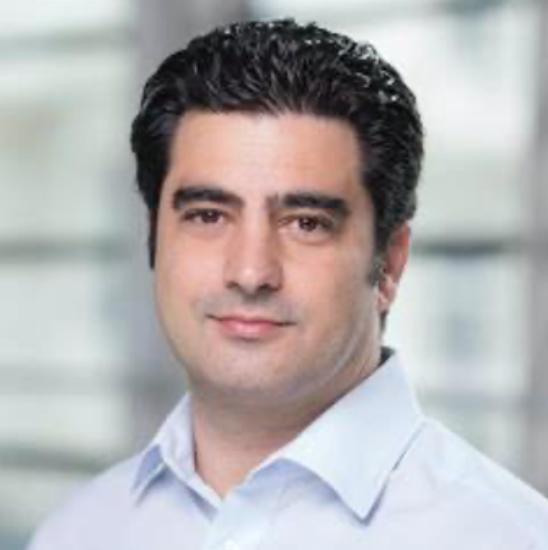
About Christos MARKIDES
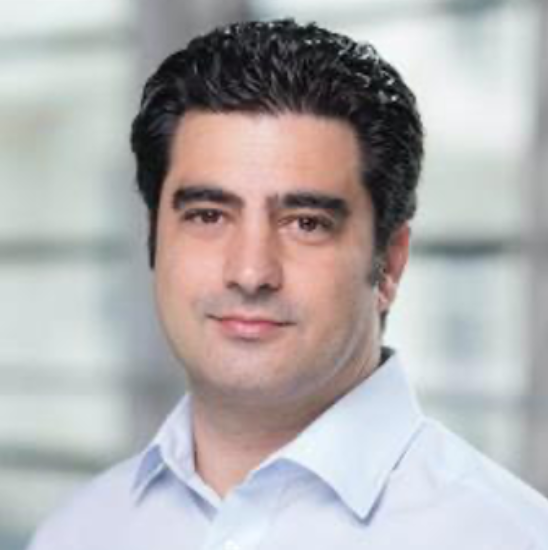 Professor Christos Markides holds a PhD in Engineering from the University of Cambridge (2005). Since 2018, he has been Professor of Clean Energy Technologies in the Department of Chemical Engineering at Imperial College London, where he heads the Clean Energy Processes (CEP) laboratory. His expertise lies in energy conversion, storage, and recovery systems, particularly in the fields of solar energy, waste heat recovery, and thermal science and engineering. He is also the co-founder of two university spin-off companies. His work covers modeling, advanced experimentation, and industrial technology transfer. He is currently editor-in-chief of the journals Applied Thermal Engineering and (more recently) AI Thermal-Fluids, and has contributed to numerous national and European research programs.