Mini-Labs designed by LCPI are used by Médecins Sans Frontières teams all over the world!
" We are very proud of this partnership with MSF," says Améziane Aoussat, director of LCPI and co-leader of the project. "This is not research conducted solely within the laboratory; it is truly a collaborative effort combining the expertise of both LCPI and MSF."
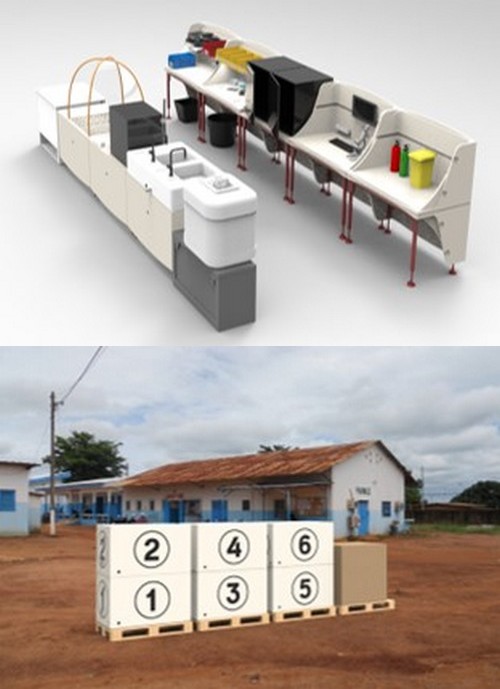
"The transportable bacteriological laboratory is an innovation because the very idea of transporting a laboratory to extreme locations did not exist before," continues Fabrice Mantelet, senior lecturer at LCPI and co-leader of the project. "In addition, we have ensured that the transport elements can be reused directly in the laboratory structure itself. All elements have been taken into account. This principle of container-content is a real second innovation."
Combating antibiotic resistance
The Mini-Lab is a laboratory kit, optimized for quick delivery and installation in contexts where adequate equipment is lacking. It is designed to perform blood tests in order to combat antibiotic resistance. In particular, this means that broad-spectrum antibiotics are not automatically prescribed in cases of fever.
Precise specifications
The Médecins Sans Frontières teams contacted LCPI in 2017 to produce the furniture for this laboratory. " The request was to design furniture that could withstand extreme conditions," explains Fabrice Mantelet. " It also had to be easy to use, as it would be used by people with different profiles, from different countries and cultures, some of whom were not experts. It was therefore a demanding project with very specific specifications, where logistics had to be simplified as much as possible."
A multidisciplinary team
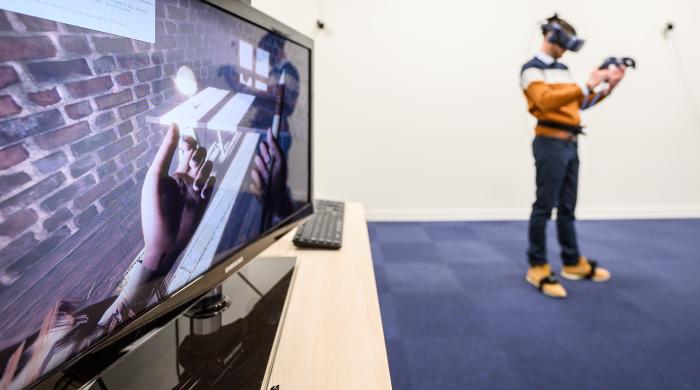
The LCPI brought together a multidisciplinary team comprising an ergonomist, a designer, two teachers, and a design engineer. The laboratory design process was organized around several stages, including a visit to a laboratory in Kremlin Bicêtre to define the standards to be met.
A functional analysis was also carried out to establish a usage scenario, from the receipt of test tubes to the analysis results. A total of 13 phases were identified.
Finally, a creativity session was organized. Doctors, biologists, and designers gathered in a 20 m² space to define all the elements necessary for the system to function.
In the end, the LCPI designed a six-module system that was tested in a hospital in Ivory Coast.
" Of course, we came back with lots of modifications to make, " smiles Fabrice Mantelet. "Then we built a prototype and installed it in a hospital in Brussels to test it. Further modifications were made, for example to the lighting. "
Finally, the first laboratory was sent to Haiti in July 2019. Since then, others have been used in Sudan and Nigeria.
A project that makes sense
" We really enjoyed working on this project, " concludes Fabrice Mantelet. " We spent 10 days in Africa observing the work of Médecins Sans Frontières. Above all, we worked with an extremely dynamic and pleasant project team on a project that really matters! "