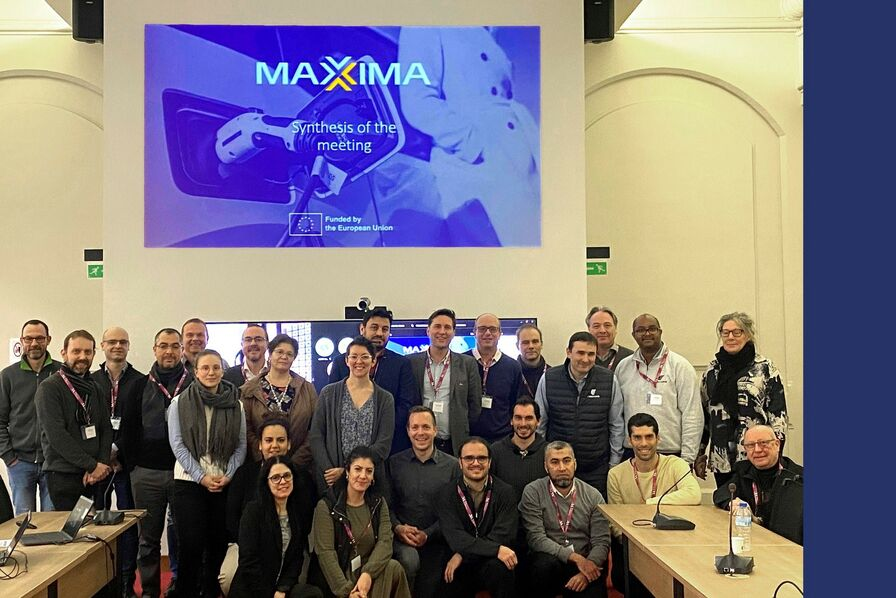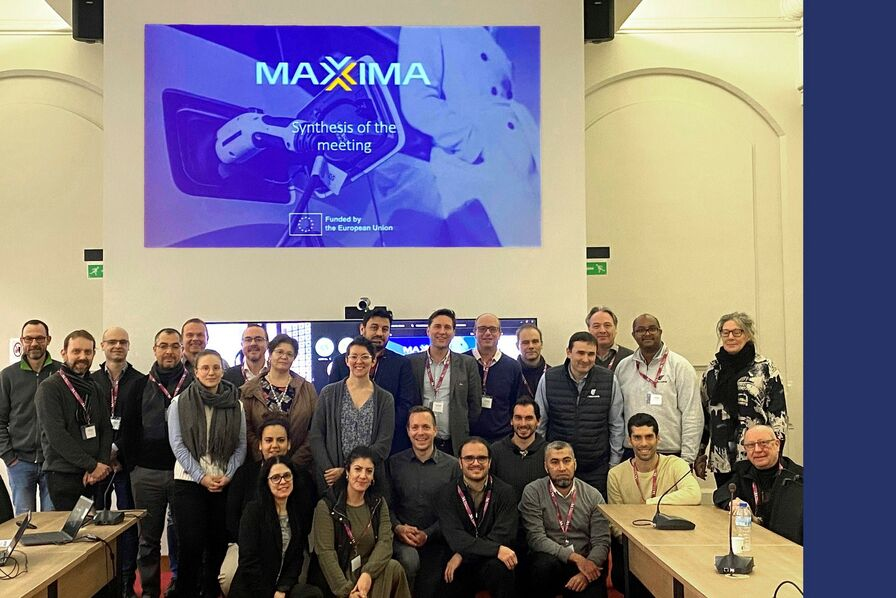
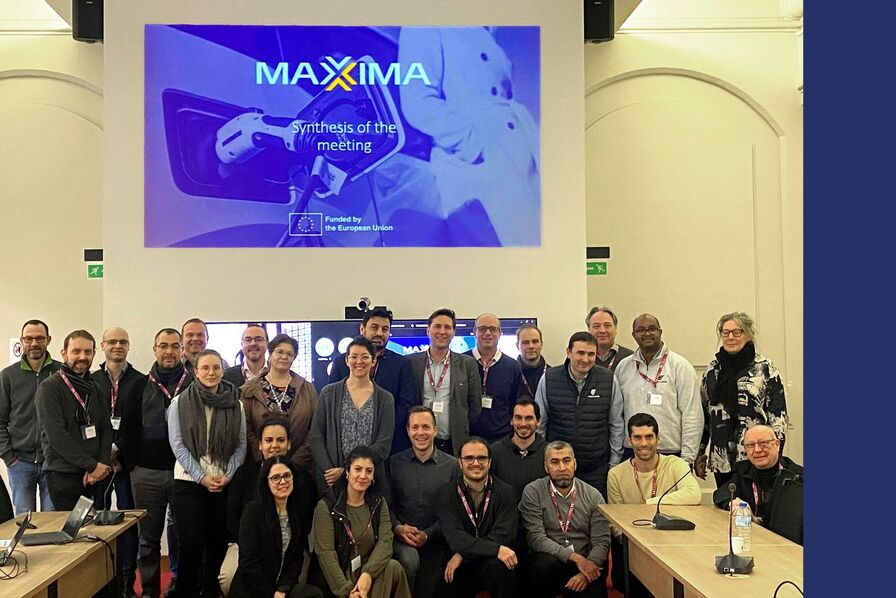
MAXIMA aims to tackle the challenge of mass electrification of motor vehicles. Coordinated by Arts et Métiers, it has received €5.6 million in funding.
Initiated by automotive manufacturers, magnetic material suppliers, and research laboratories, the MAXIMA project aims to develop a highly compact electric motor with low environmental impact and a mass production process that meets automotive standards in terms of cost and supply.
As part of the project, digital methods and tools will be developed and validated on prototypes. These will increase the competitiveness of European companies by accelerating the design phase of electric machines and their manufacturing process, and consequently the time to market.
Reconciling seemingly incompatible constraints
In addition, this project will contribute to the maturation of new technologies, such as digital twins, to exploit the full potential of electric motors. The machine and its production system will have to reconcile seemingly incompatible constraints such as high efficiency, low costs, high performance in terms of power/torque density, and high recyclability, particularly for critical raw materials such as rare earths.
To achieve this goal, MAXIMA will focus on one topology: the synchronous axial flux motor. This topology is currently on the market and is very efficient, but only covers a niche market due to its high manufacturing cost. It also offers many avenues for improvement that are still largely untapped or unexplored.
Unlike radial flux electric motors, which are mainly used in the automotive sector, there is significant room for improvement in axial flux motors by focusing on both design and manufacturing processes in order to achieve higher performance and reduce costs, while maintaining a low environmental impact.
The contribution ofArts et Métiers expertise
The MAXIMA project consortium brings together research teams from the Technical University of Cluj-Napoca, Universitat Politecnica De Catalunya, Vrije Universiteit Brussel, Fundacion Empresa Universidad Gallega, and Arts et Métiers, as well as manufacturers from across the value chain, from raw material suppliers to car manufacturers, including a recycling company, namely OCAS/Arcelor-Mittal, Hoganäs, MIMPlus Technologies, Nidec PSAEmotors, 4Multiphysics, and Stellantis.
Arts et Métiers, through its L2EP (Laboratory of Electrical Engineering and Power Electronics of Lille) and I2M (Mechanics and Engineering Institute) and MSMP (Mechanics, Surfaces, Materials and Processes) laboratories, contributes its expertise in the fields of electrical engineering, manufacturing and life cycle analysis. Together, they can tackle the main technological and scientific challenges in the electromagnetic, mechanical, and thermal fields in order to arrive at a solution that is close to commercialization.
Stéphane Clenet, professor of Electrical Engineering and researcher at L2EP on the Arts et Métiers campus Arts et Métiers Lille, is the coordinator of this project, which is supported and funded by the European Union to the tune of €5.6 million.