
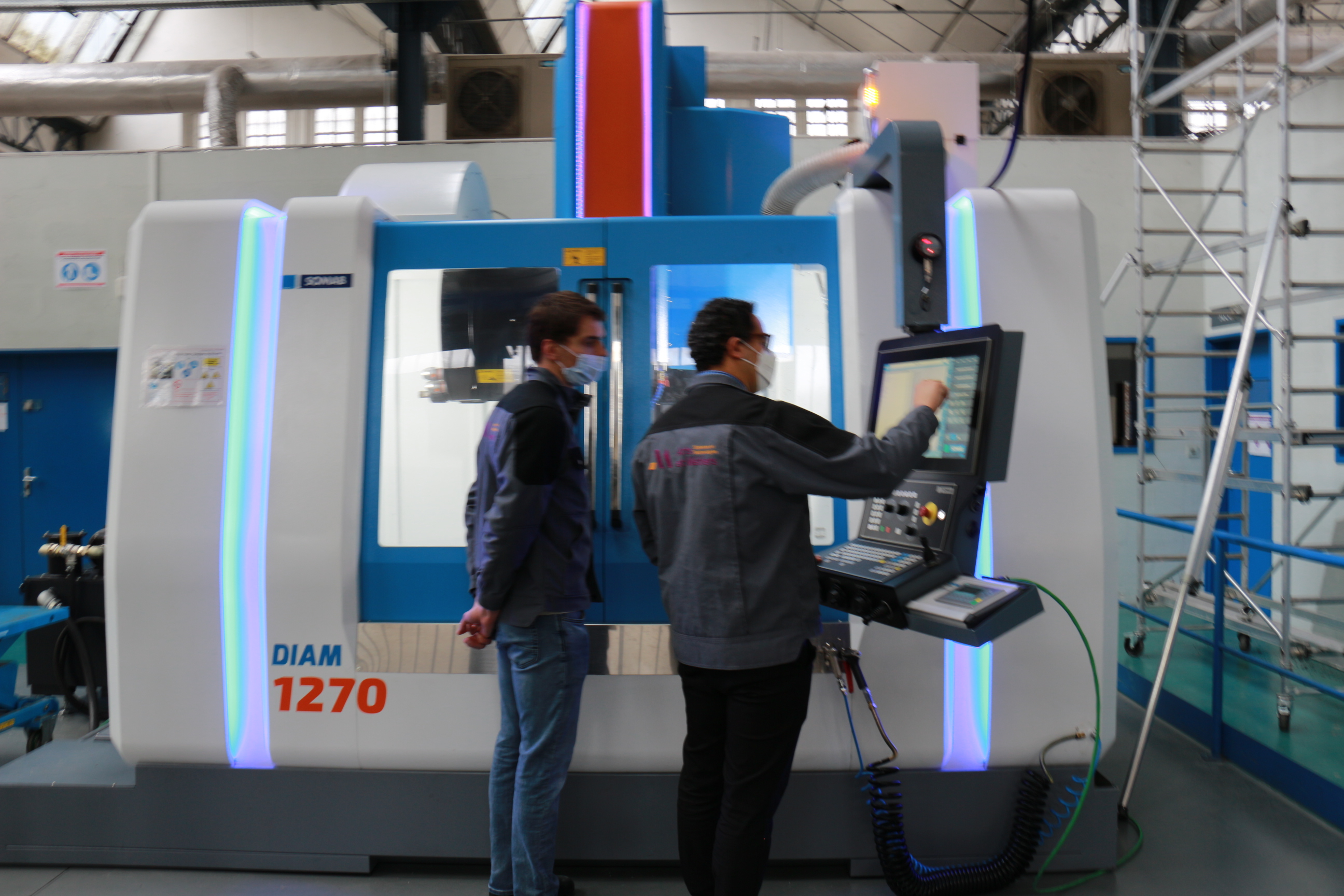
The new cryogenic machining center, which arrived on the Angers campus in January, will be operational for teaching purposes in the next semester and is already being used for research. Yessine Ayed and Bruno Lavisse, senior lecturers at the Lampa laboratory in Angers, tell us about this machine, which is unique in France.
How is a part manufactured in a machining center?
Traditionally, when manufacturing a part in a machining center, a mixture of oil (5%) and water called emulsion is used for lubrication. Lubrication serves to reduce the temperature of the cutting area, increase tool life, and thus reduce wear and tear to increase productivity. Traditional lubrication has its difficulties, including safety issues (slippery floors, allergenic products, inhalation of carcinogenic oil vapors, etc.). As the workpiece and chips are contaminated by cutting oil, after machining, the workpiece and chips must be cleaned and the oils treated. So, in addition to the machinability aspect, there is also the whole issue of safety, decontamination, and environmentally friendly treatment.
When using the machining center on complex, high-value-added parts, such as titanium parts for the aerospace or biomedical sectors, for example, there are significant machinability issues. This has a major impact on productivity, which is quite low. For information, an aluminum part takes 5 minutes to machine, while the same part in titanium takes 50 minutes.
Part of the solution to this problem lies in finding machining aids.
Why use cryogenics in a machining center?
Cryogenic assistance is a lubrication system. By using a cryogenic fluid, no cutting oil is required. The liquid nitrogen evaporates into the air, so all that is needed is to control the suction. The parts and chips are not contaminated, so post-machining treatment is minimal, making this cryogenic technique very promising.
What is the idea behind the arrival of this cryogenic machining center?
The idea behind this project is to demonstrate the value of this technique. This machine will be used immediately as part of a doctoral thesis that has just begun in Angers, with Achref FERSI. This thesis is part of a larger project called "ScCryo," which brings together Lampa in Angers, Labomap in Cluny, the Chambéry Institute, and the Paris campus. This project will last four years and include three theses and one post-doctorate. One thesis will be written in Angers, one in Cluny, one in Paris, and one post-doctoral thesis will be written in Chambéry, which will compile the results of the theses and aim to work on the life cycle assessment (LCA) of the part. The aim will be to compare the entire supply chain up to the machining stage and to study whether this machining technique is beneficial in terms of life cycle.
Is this machine part of the Evolutive Learning Factories ELF)?
In Angers, we are working extensively on high-pressure water jet assistance (water + oil injected at very high pressure). This high-pressure technique also increases productivity. On this machine, we will be able to compare traditional lubrication (water + oil), high-pressure technology, MQL technology (a technique that uses very little product), and cryogenic assistance. We will also be able to combine several techniques and thus make comparisons.
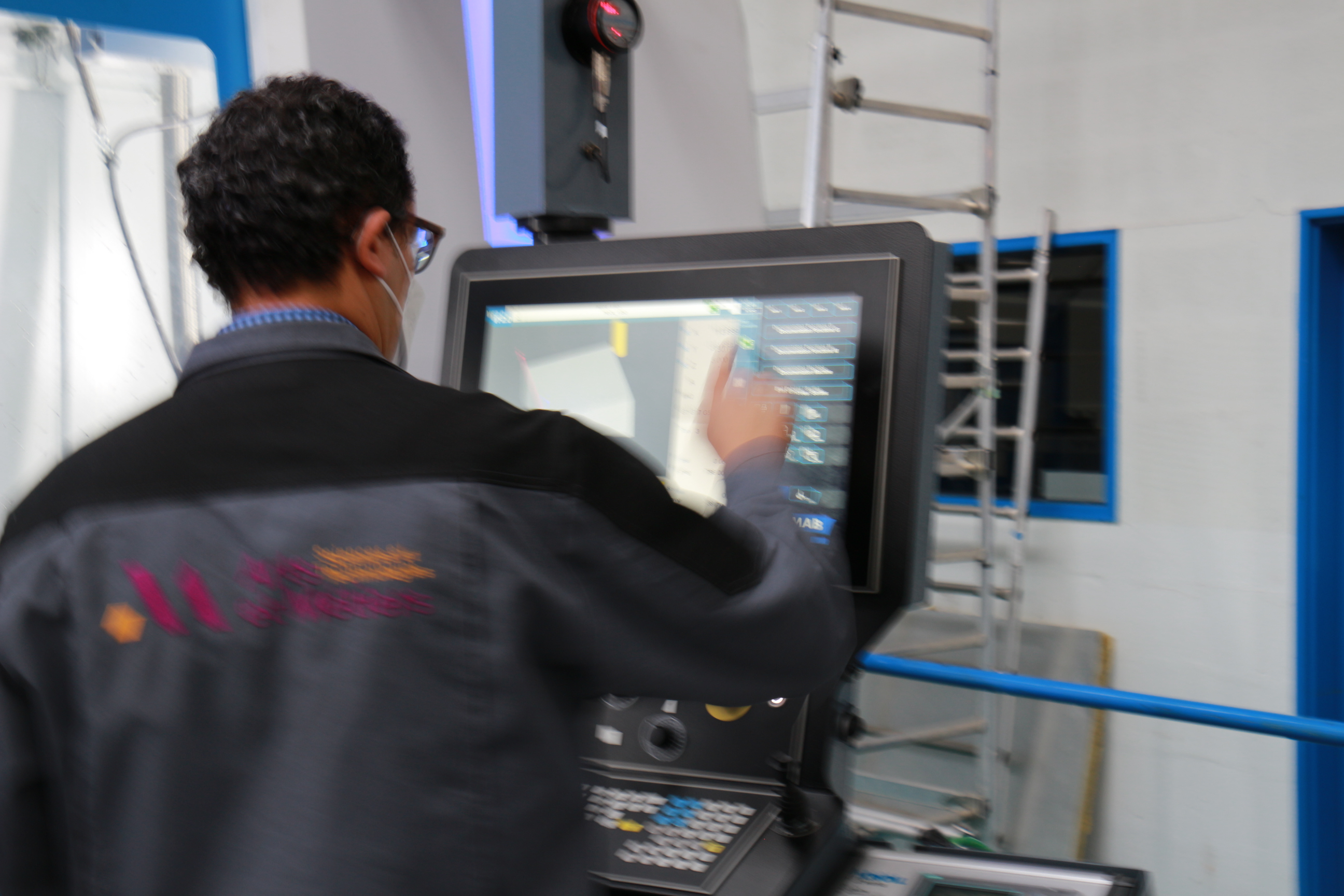
It is a very agile machine that allows you to switch very quickly from one technique to another. The machine will also be instrumented and connected. This will make it possible to extract data and study it in real time: machine power, temperatures, forces, etc.
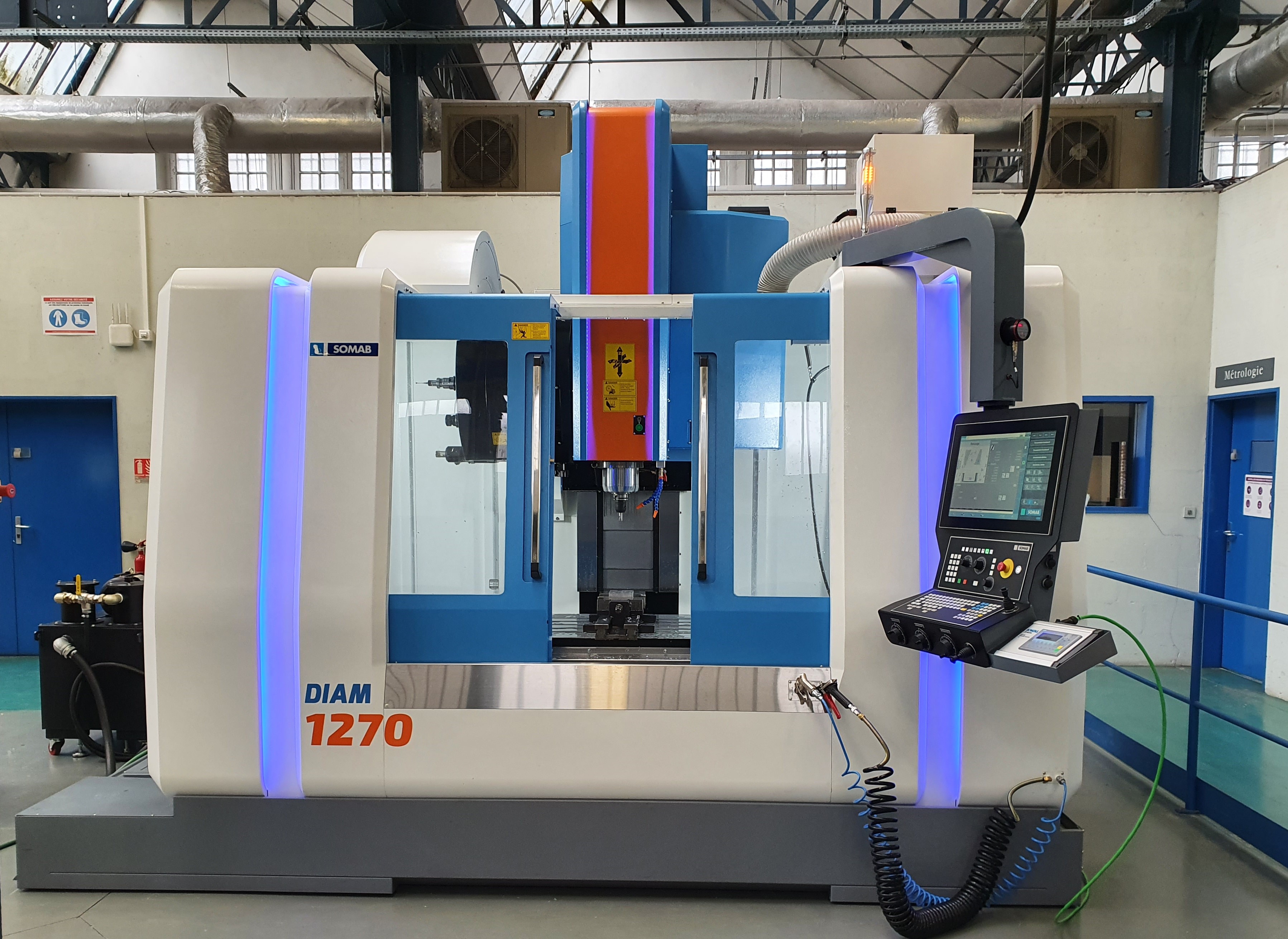
When the call for tenders was issued, two companies (Knoll and SOMAB) decided to work together, combining their complementary skills in machining and cryogenics to jointly manufacture and test the machine before delivering it. It is the only machine of its kind in France. We could conclude by saying that it is a conventional machining center made exceptional by the addition of the cryogenics system.
But what is it?
A machining center consists of:
- A table on which the raw material to be machined is secured
- A rotating spindle with a tool attached to it
- A digital control that controls the machine
- A tool store that stocks all the machine tools
- A water spray system to remove chips generated by machining
- A blowing system that removes chips
- A chip conveyor that transports chips outside the machine
Machining assistance: this is an additional technique that complements traditional techniques, thereby increasing productivity and facilitating the production of parts. Used for high value-added parts.