In a world facing a climate emergency, the search for sustainable energy solutions can no longer wait. Among the technologies that will shape the future, hydrogen is emerging as a key player in the decarbonization of the most energy-intensive sectors. In 2022, Arts et Métiers a strategic decision to launch a pioneering program focused on this promising sector.
An initiative expanded to the Carnot ARTS level and coordinated by Professor Farid BAKIR, a research professor at the Fluid Engineering and Energy Systems Laboratory and member of the Carnot ARTS Management Committee. He clearly states the ambition of this project: "We want to make hydrogen much more than just a research topic: we want it to be a driver of innovation, collective commitment, and sustainable transformation."
A MISSION TO SERVE THE COMMON GOOD
The H2 program aims to build a sustainable, inclusive hydrogen sector that is deeply rooted in local communities. This ambition requires close collaboration between researchers, manufacturers, and institutions, with each contributing their expertise to overcome technological challenges. But this collaboration, although crucial, faces conflicting interests. Academic research, with its long cycles, sometimes clashes with the urgency of concrete industrial action.
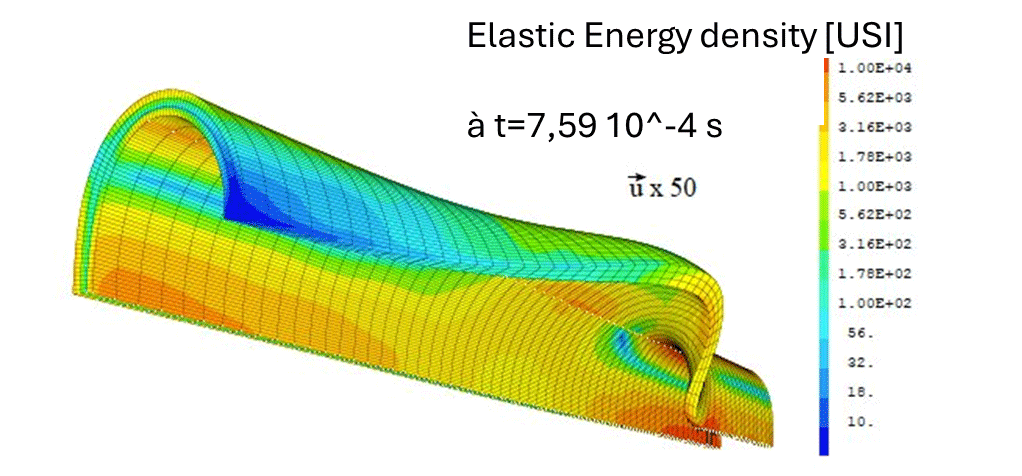
There are many technical challenges. While the materials needed for hydrogen remain expensive and energy losses associated with storage and conversion remain high, researchers are redoubling their efforts to overcome these obstacles one by one. Improving the thermal management of fuel cells, extending the resistance and safety of high-pressure hydrogen tanks, and enhancing the reliability of systems are just some of the current challenges. For example, Imen FEKI and Clara PEYNAVEYRE's thesis on composite materials for hydrogen tanks explores their resistance to severe and combined thermomechanical and hygrothermal stresses. This research is essential for optimizing the durability and resistance of these components to cyclic stresses, shocks and thermal stresses, fatigue cycles, and environmental stresses.
"The complexity of these challenges—scientific, technical, industrial—requires close collaboration between laboratories and companies, on platforms where innovation meets reality," emphasizes Farid Bakir. This collaboration is essential to overcoming these challenges, which combine scientific, economic, and logistical aspects.
AN OPEN, CROSS-CUTTING, AND TERRITORIAL STRATEGY
The program is based on a systemic vision that aims to break down barriers between disciplines and promote networking. Arts et Métiers the Institut Carnot Arts are thus building a resilient sector in collaboration with industrial and institutional giants such as France Hydrogène, the CEA, Safran, ArianeGroup, Arkema, Air Liquide, and many others.
"Our account managers work every day to connect laboratories with the real needs of manufacturers. This ability to listen fuels innovation and supports the creation of industry-research consortia dedicated to carbon-free hydrogen," explains Philippe Veron, director of the Institut Carnot Arts.
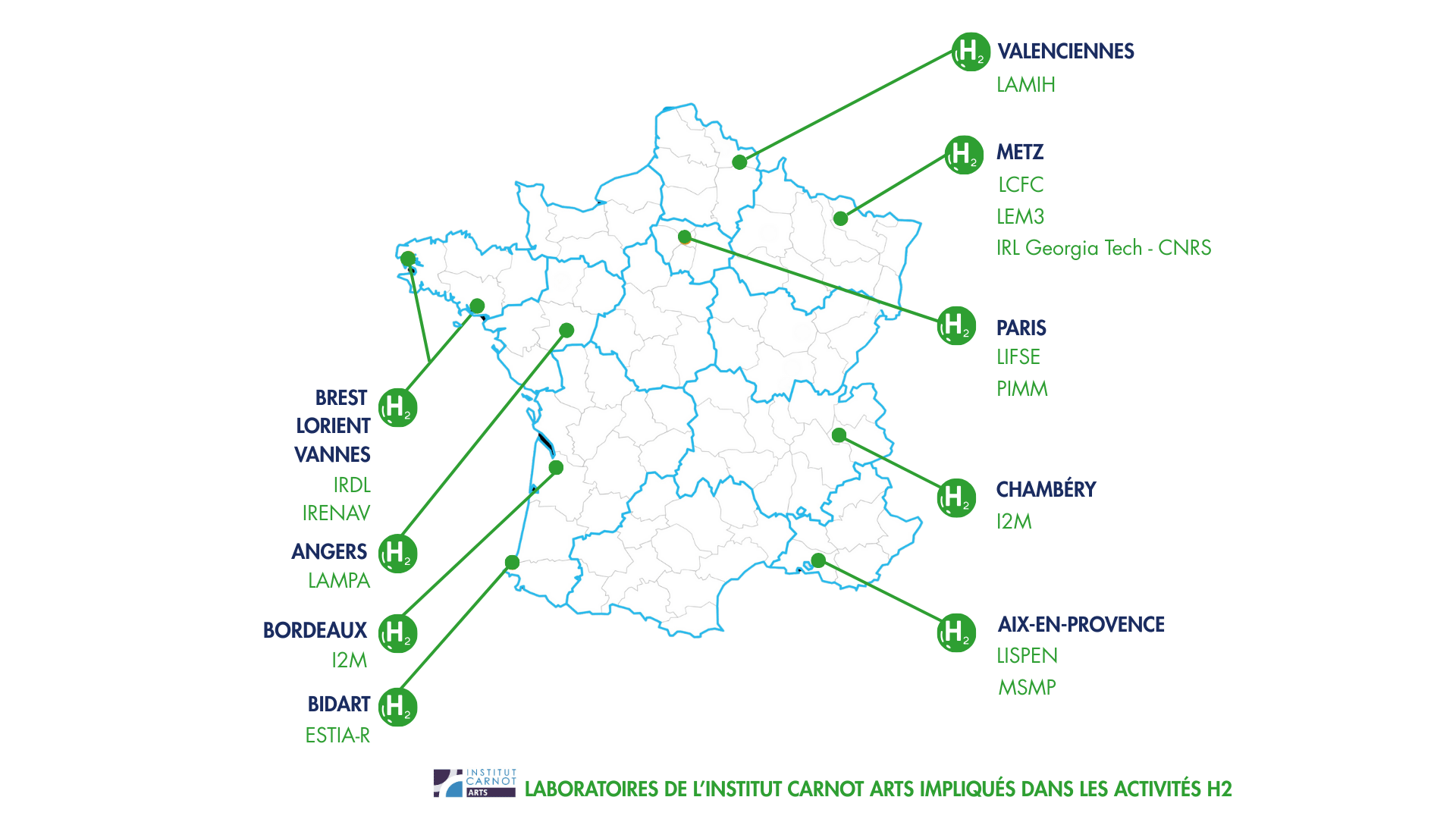
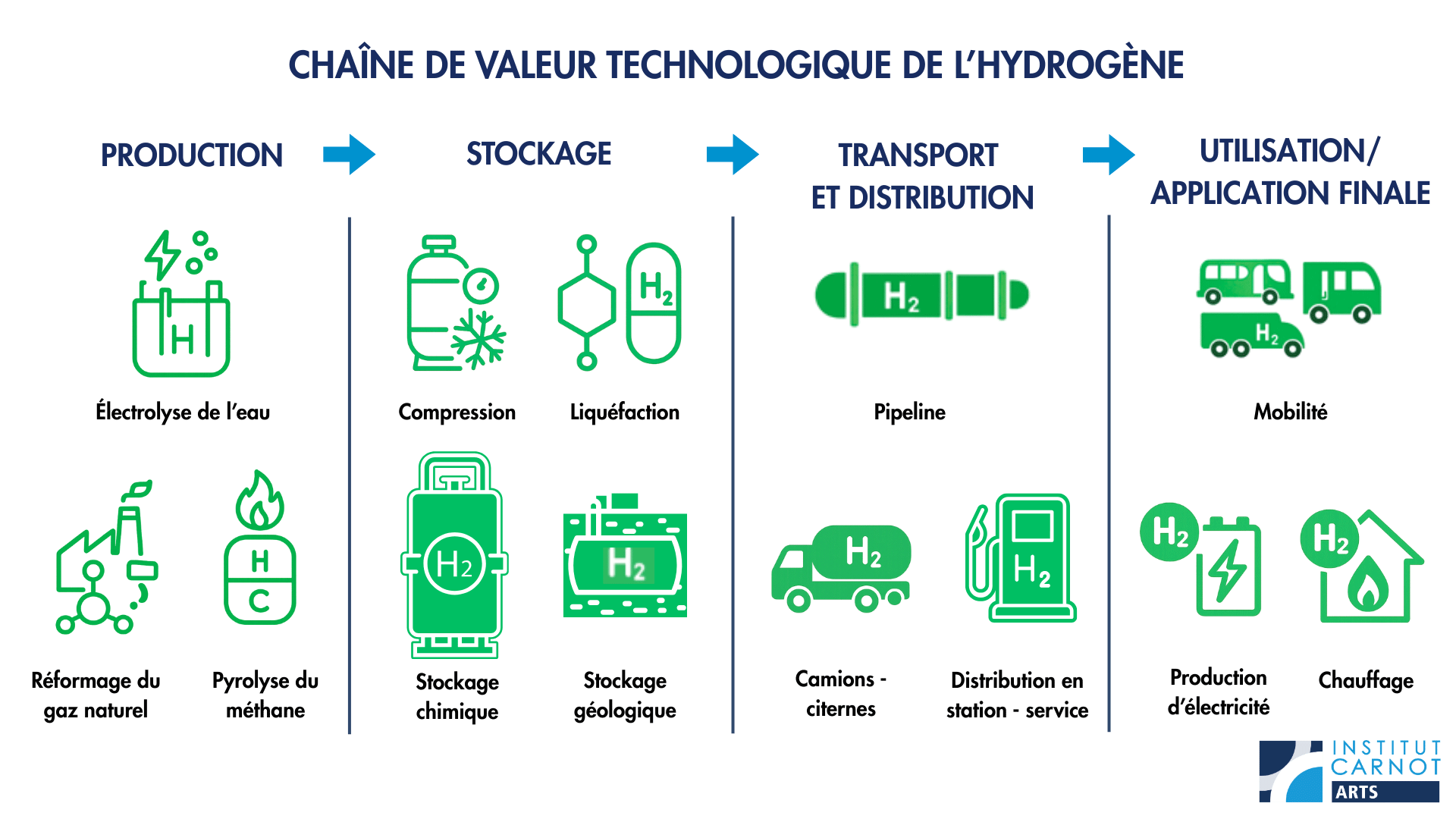
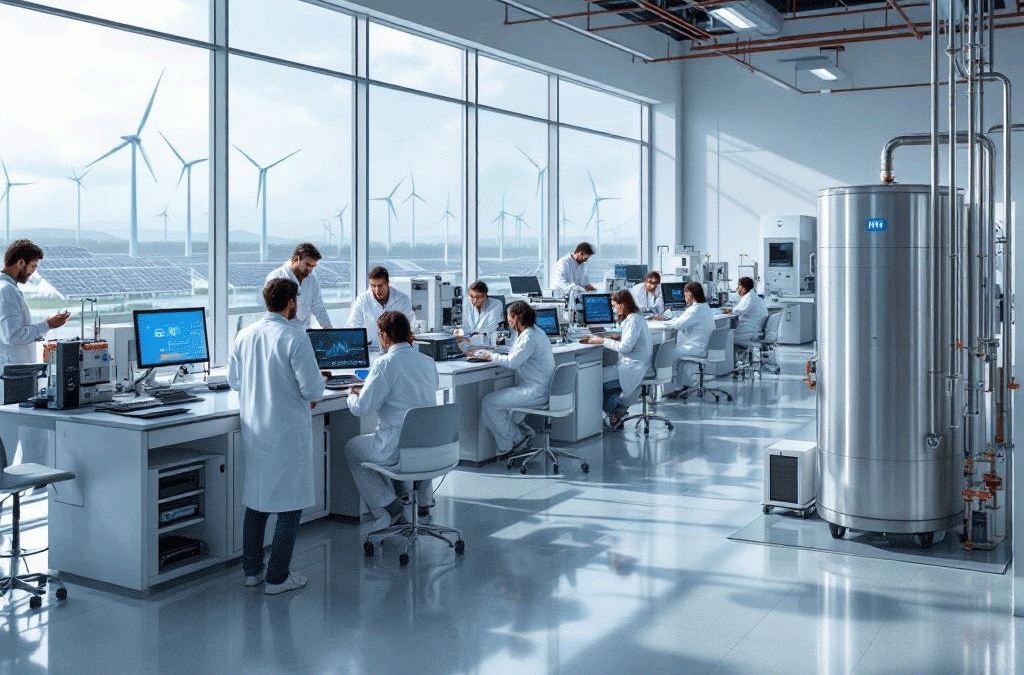
The laboratories at the School and the Carnot Arts Institute carry out activities covering the entire hydrogen value chain: from production to use, including storage, transport, and distribution. This work, at the crossroads of several disciplines—mechanics, materials, flows, thermal engineering, maintenance, and safety—relies on advanced modeling tools that incorporate the latest innovations in scientific computing.
RESEARCH: THE SCIENTIFIC DRIVING FORCE BEHIND A RAPIDLY EXPANDING INDUSTRY
Today, around fifty doctoral researchers are already working on projects combining materials, energy, and data. One of the flagship projects is OptUseH₂, launched in 2023 and coordinated by Joseph FITOUSSI. This project brings together six Carnot Arts laboratories and two partner laboratories to optimize all hydrogen systems, combining artificial intelligence, field data, and physical experiments.
Among the theses currently in progress, those by Jordan TOURNERIE on the weakening of polymers for hydrogen storage, Feriel ABDERRAHMANE on hydrogen from marine renewable energies for isolated islands, and Clara PENAVAYRE on the aging of innovative and recyclable composite materials are making significant progress. These projects aim to enhance the reliability, efficiency, and sustainability of hydrogen-related technologies, whether for storage, distribution, or conversion.
Dinya MENECEUR (LIFSE laboratory) works on modeling and optimizing regenerative compressors used in fuel cells. Her work focuses on improving compressor efficiency by taking into account changing environmental parameters and optimizing the compression process, which is essential to the overall performance of fuel cells.
Abel NETTER (I2M and LIFSE laboratories) conducts research on ministack (3-cell) and full stack fuel cell systems. His research aims to study, through numerical and experimental approaches, the performance and durability of these systems under varying operating conditions and dynamic loads. The goal is to understand how parameters such as temperature, pressure, and humidity affect the performance, lifespan, and degradation mechanisms of fuel cells, while developing models and experimental studies to isolate degradation phenomena. His work is crucial to improving the efficiency of fuel cells, already in commercial use, and making them even more robust for large-scale applications.
Nour HABIB's research (LAMPA laboratory) focuses on numerical simulations of rock salt behavior in geological hydrogen storage. This innovative project provides a better understanding of how hydrogen can be stored in salt caverns, thereby contributing to the development of sustainable solutions for large-scale hydrogen management.
Ibrahim SEBEI (PIMM laboratory) is developing an innovative numerical simulation tool for filament winding, coupled with a finite element calculation module dedicated to pressurized hydrogen tanks.
His work addresses the growing challenges facing the hydrogen industry, providing manufacturers with a powerful solution for designing, optimizing, and controlling storage tanks, from the design phase through to commissioning.
Pedram AMINHARATI (LCPI and PIMM laboratories) uses artificial intelligence to optimize composite structures for hydrogen tanks. He is developing algorithms capable of intelligently sequencing composite layers to improve both burst and fatigue resistance while reducing overall mass—a direct lever on energy consumption and production costs. These approaches are ultimately integrated into a digital twin of a cyclic pressure tank, paving the way for predictive, real-time performance management.
These examples illustrate both the appeal of the field for young researchers and the proliferation of topics being explored and their necessary convergence.
TRAINING THE TALENTS OF TOMORROW
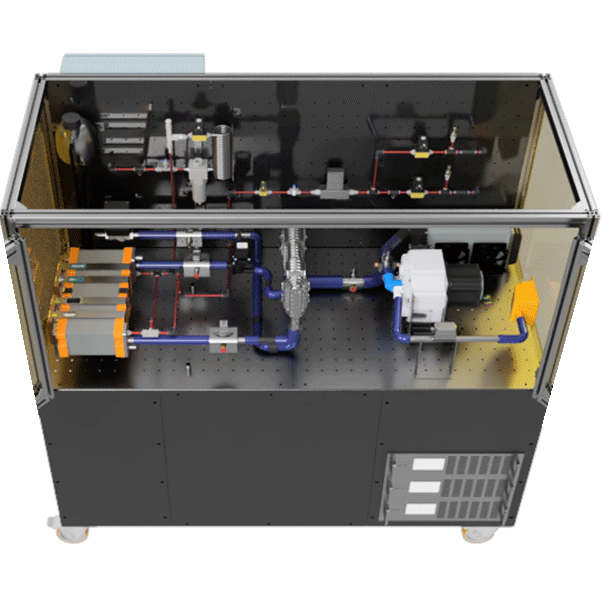
Training engineers in hydrogen technology is also central to the project-based teaching approach adopted by Arts et Métiers. Engineering students work on real-world cases, often in collaboration with industry partners. This enables them to develop cross-disciplinary skills, ranging from energy management to material sustainability.
By participating in structuring projects such as the AMI-CMA "École H₂" (Hydrogen School), led by the Bourgogne-Franche-Comté region. This involves creating training courses ranging from CAP (vocational training certificate) to doctorate level, is fully in line with efforts to develop a robust hydrogen sector, and positions the institution as a key player in this energy transition.
In addition, international partnerships, particularly within the framework of the BRAFITEC program, with institutions in Europe, Brazil, and Japan, further enrich this dynamic of openness and collaboration.
BRINGING A COMMON HYDROGEN CULTURE TO LIFE
The program is not limited to a series of technical projects: it is also a space for exchange, sharing, and reflection. Seminars, webinars, and publications contribute to forging a true common culture of hydrogen withinArts et Métiers the 23 research laboratories of Carnot ARTS. The first major event will take the form of a Doctoral Students' Day, bringing together young Carnot ARTS research students involved in hydrogen-related topics, their seniors, and institutional and industrial representatives from the sector at the Arts et Métiers campus Arts et Métiers Paris.
"This is not just a technological issue, but a real collective challenge: that of transforming our energy models for a more sustainable future," concludes Professor BAKIR.